
Beautiful Chaos
Photography by Amelia McCann
Three wild toddlers, a mystery no medical expert has managed to solve and a sink full of syringes. This mum wouldn’t have it any other way.
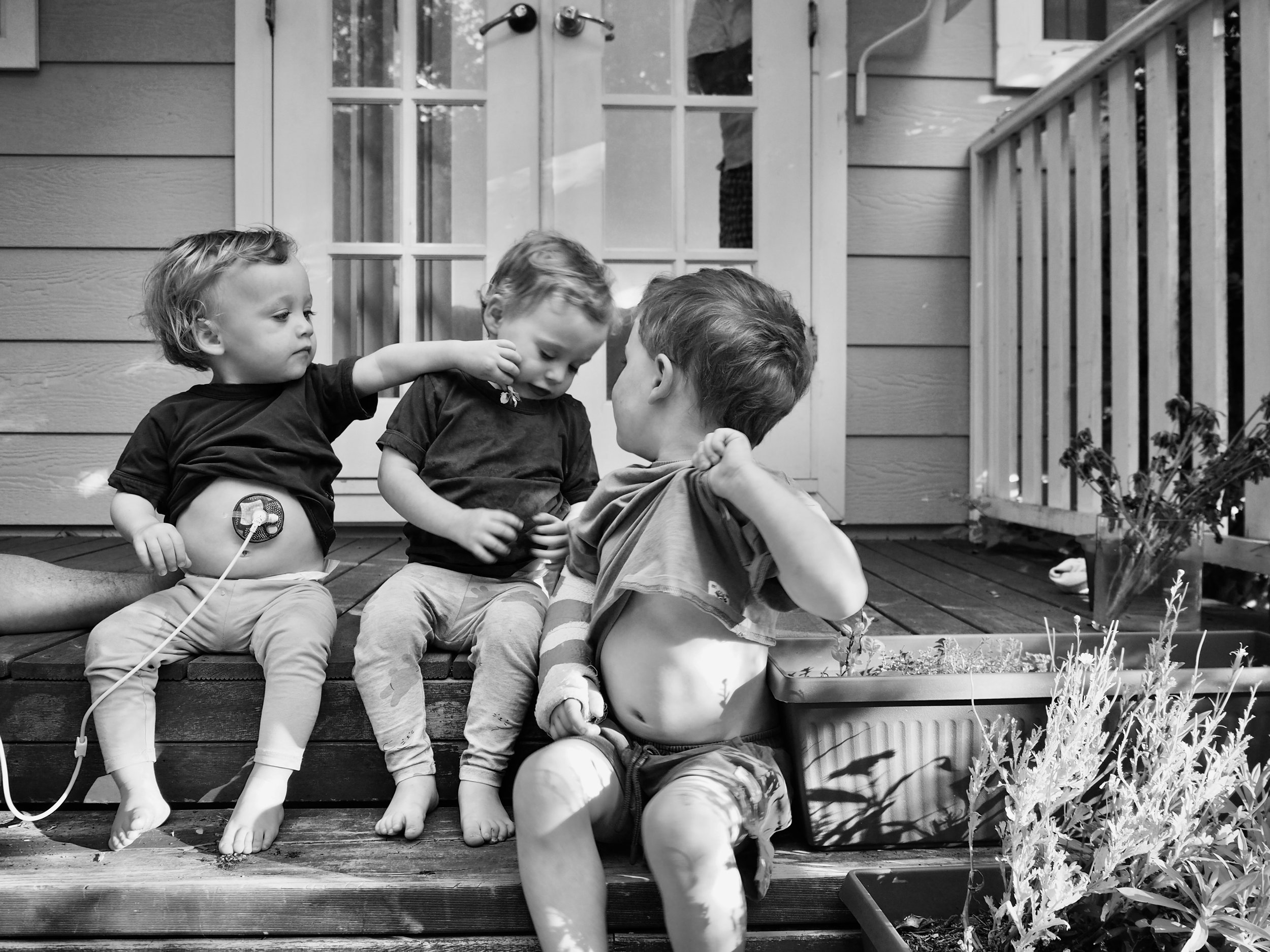
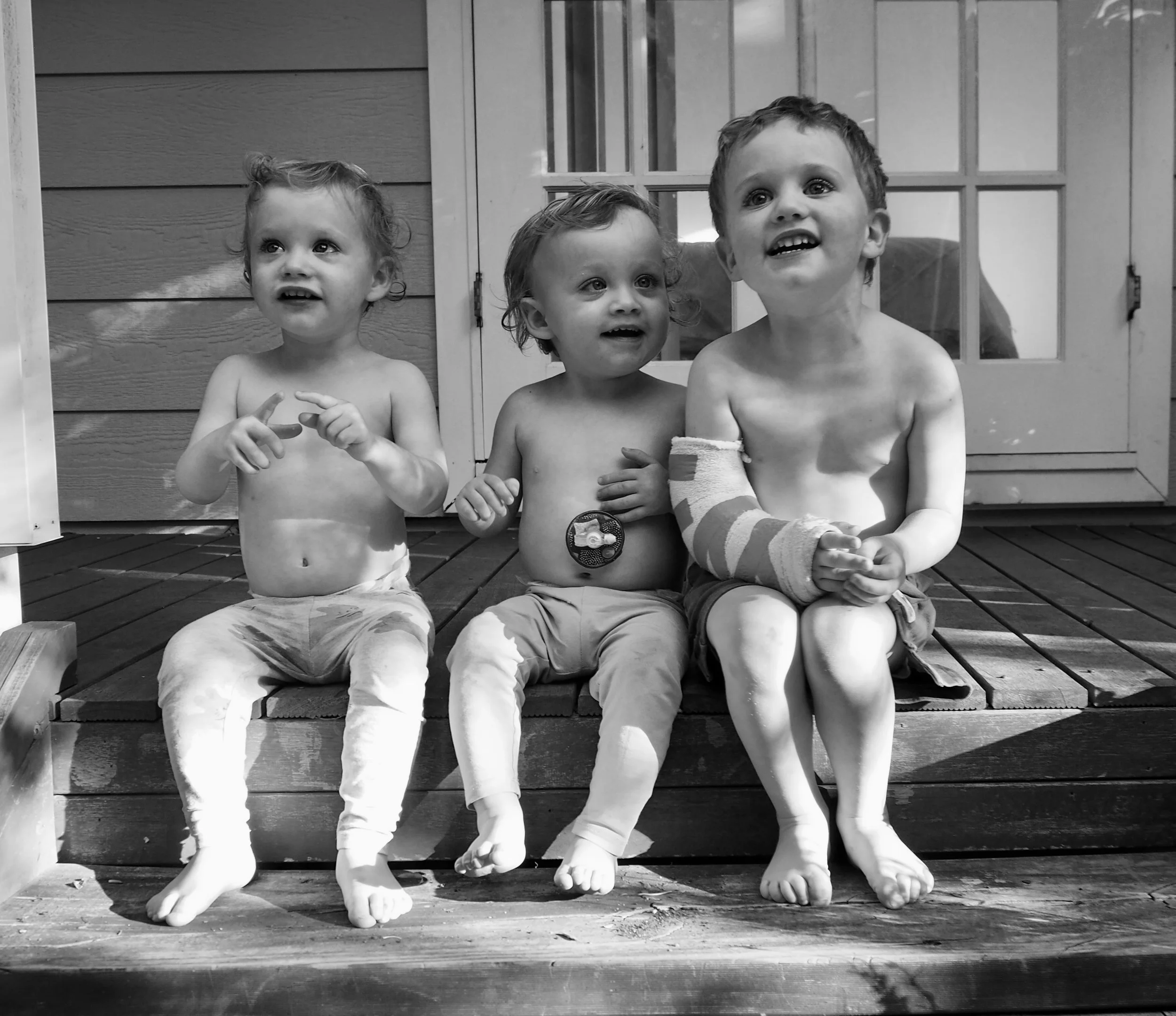
Amelia McCann has three boys under three – a loaded sentence, if ever there was one – and that’s not the whole story. She and her husband, James, live in Sydney with their three-year-old, Hugh, and almost two-year-old twins Scotty and Pat, the latter of whom, for a root cause yet to be discovered, relies on tube-feeding. Much to his twin’s delight.
“Scotty is a bit of a tube thief – he loves a breakfast blend and squirting flushes across the room,” says Amelia. “I often find myself chasing him down the hallway as he makes a run for it, trying to retrieve a syringe mid-feed. Cheeky!”
In amongst the fun and calamity, the family also has “a very poorly trained” golden retriever called Lenny. It’s fair to say that, since the twins arrived early, there’s been a whole lot of learning and a whole lot of love.
Amelia sat down with us to talk all things tubes, twins and toddler chaos.
When did tube-feeding enter the picture for Pat – and how did you feel about it at the time?
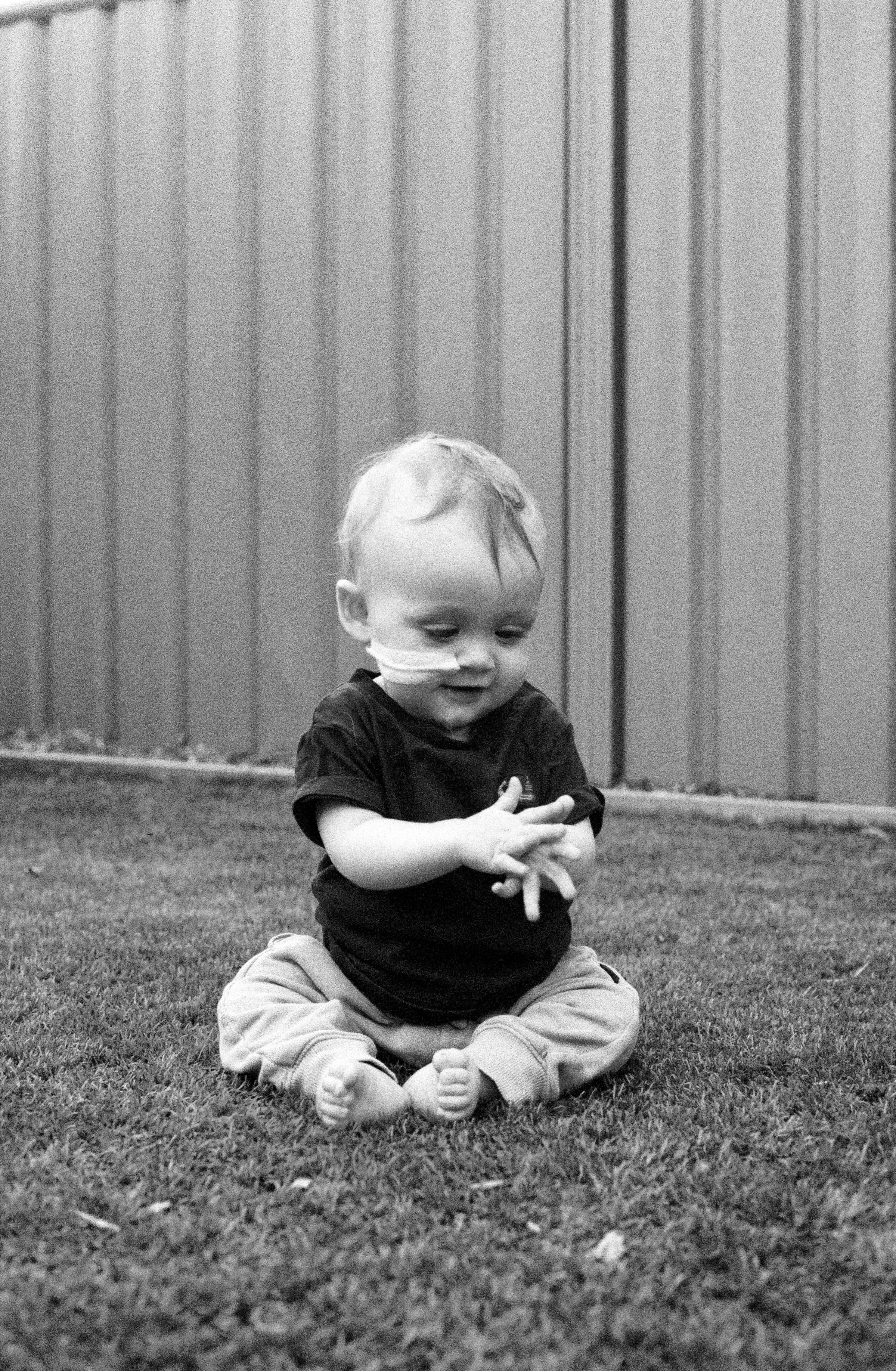
The twins were born at 35 weeks and both briefly needed NG tubes in the NICU. Once home things were manageable until around 8 weeks old, when Pat became fatigued with feeds, dehydrated, lethargic, was aspirating and something just felt different. This led to his first hospital admission and the beginning of understanding his medical complexities.
Over the next couple of months, he required intermittent NG feeding. At four months, an MRI revealed neurological differences, and as his feeding regressed, his reliance on the NG tube increased over time until he had his gastrostomy (G) tube surgery at 14 months old.
At first, I think there was a bit of denial, I kept thinking “this is only temporary” and without a diagnosis it was a blurry road. No one really plans or prepares you to tube-feed your child but, with time, we started to see the tube as a positive thing for Pat – to accept it and now be so incredibly proud of it. And him!
Having no diagnosis can be a really challenging space to sit in. How does that uncertainty shape your experience of tube-feeding – and has your relationship with it changed over time?
Pat is complex. He has global developmental delay, low tone, ongoing neurological changes in the white matter of his brain, abnormal eye movements, an adrenal lesion and feeding challenges. No one has been able to pinpoint why all these things are occurring together and we are still searching for an overarching diagnosis. Although his medical teams strongly feel he has a genetic condition, the gene is yet to be found and we have been told it may take some time for the genetic world to catch up to our Pat.
Knowing that Pat is different but not being able to pinpoint the ‘why’ is an isolating space to sit in. Although a diagnosis may seem insignificant, being without it makes accessing supports harder and leaves us without a roadmap or community of families on the same path.
In terms of feeding, not having a diagnosis potentially contributed to delaying our decision for a G-tube and added pressure to “fix” his feeding without it. It felt like if we had a more unified understanding and knew more children that came before us and walked that path, this could have taken a lot of the uncertainty away. We put a lot of pressure on ourselves and on Pat in his first year to not need the tube, but as time went on, he was really showing us that it was exactly what he needed to survive and thrive.
As soon as the G-tube surgery was over, all that pressure was gone. We were no longer battling with NG tubes constantly falling out and the pain and trauma it would take to reinsert it. We saw Pat make big gains in his growth and when we were able to start introducing blended foods, it felt incredibly empowering to be able to contribute positively and feel like we were helping in a small way.
What helped you to get comfortable with tube-feeding – both practically and emotionally?
Practically it has just been trial and error. The early days were overwhelming, especially when we introduced blended foods – I never envisioned myself being so angry at a blender. I’ve tried to just find a rhythm that works for us and Pat and ways in which it feels the most inclusive for us as a family. We do big batches of blends for the week, freeze them and defrost them as needed. We often blend a lot of what we have had for dinner because it feels more inclusive and just part of our normal routine.
Sometimes it does take a bit of forward thinking – especially on big days out – but no more than packing a thousand snacks for my other two boys and I try to always think of it like that. Other than the sink full of syringes at the end of the day that reminds me our world is a little different, Pat’s tube feels so ordinary now – and I love that. We often laugh, when chasing our other two toddlers around begging them to eat half a chicken nugget, that Pat is the best fed and easiest fed child in the house!
What are the biggest challenges you’ve faced – and maybe still face – when it comes to tube-feeding Pat?
I get nervous feeding in public sometimes – especially with curious onlookers, their questions and comments while managing equipment and toddlers and wanting to protect Pat. I’m learning to see these moments as opportunities to advocate and educate, but also to be brave and care less about what others think.
Having two other little humans that rely on me is also challenging at times. It’s tough when you have your hands full prepping and giving a feed when your other toddlers are crying out for something. I’m always mindful to make them feel just as important and included in Pat’s feeding regime.
Watching us feed Pat has fostered a beautiful curiosity and compassion that only Pat could teach them. Our eldest son always asks if he can help now and it’s beautiful to see that caring nature be nurtured by something other kids would not normally be exposed to.
We heard a rumour that juggling tube feeds at the playground is your specialty. How do you make this work?
Ha! Yes! I feel like Hugh and Scotty make it their mission to ensure they are at the highest point of the playground at the exact moment I have connected Pat’s tube. It's always at these moments – when I’m trying to juggle three syringes and keep Pat still and happy – that they yell out, “Mum, help me, I’m stuck?!” with a cheeky grin. I think this has fostered great independence and patience in them. And severe anxiety in me!
In terms of making it work, I’m a bit of a minimalist at heart so we keep it very simple. I pack however many feeds we will need in a thermos – never more than we need, so dicey! – along with syringes and extension sets stashed into a sandwich bag and we are good to go. Pat’s feeds and equipment just rumble around with my other toddlers’ snacks. My mum bag is a bit of a beautiful chaos.
What would you most want another parent, sitting in that same uncertain space of having no diagnosis, to hear from you?
I would want them to know that although it feels incredibly disheartening, you are not alone. Diagnosis or no diagnosis, we are all part of a community advocating for our children, loving them fiercely and learning from them. I can only think this journey to find answers is building resilience and courage and an opportunity to learn and love our child just as they are. I only know Pat as just “Pat” – and maybe that’s the beauty in the unknown.
Never give up advocating and never stop fighting to find the right team around you. That takes time to find, but trust your gut, you will know when you have or haven’t found the right people.
Lastly, I hope one day you get that phone call, the one where they say, “we found it”. I hope it brings you hope and peace and all the answers you were searching for, just as we are and will continue to do. Until then, may we find a bit of calm in enjoying our beautiful kids just as they are right now.
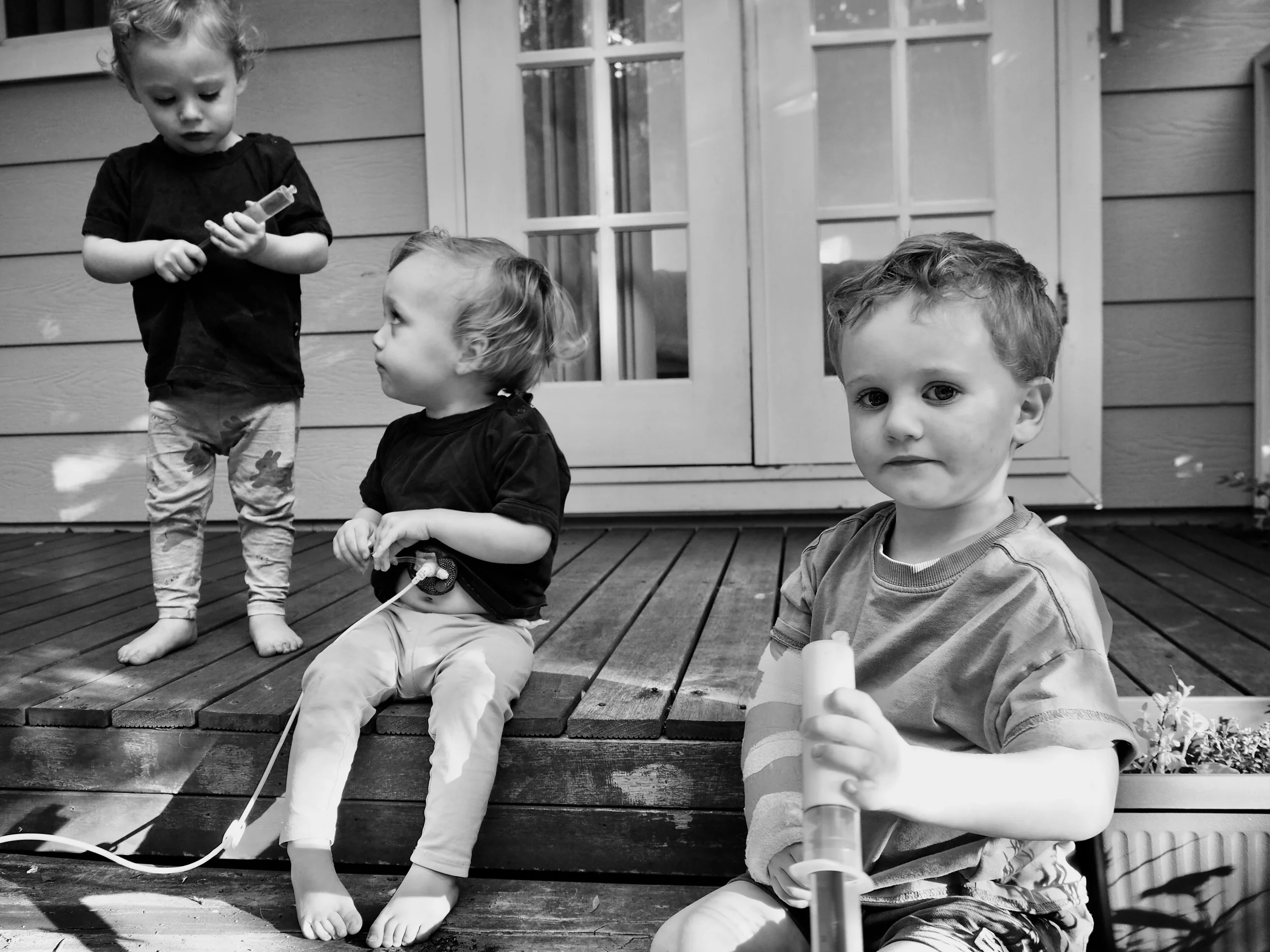
You’ve documented Pat’s feeding journey through film photography and we’d love to hear a little about that. What has capturing these moments on film meant to you?
I love photography because it really teaches you to slow down. I think when you’re in the depths of navigating disability and little ones, it’s hard to take it all in. I felt an immense pressure when I had my twins to “enjoy every moment” so film photography, for me, was a reminder to do exactly that.
We also wanted to get family photos done professionally, but I was so nervous that a photographer would want to try and make Pat look “normal” that I decided to pick up a camera and start documenting the boys myself. I love capturing them, exactly as they are in that moment of time.
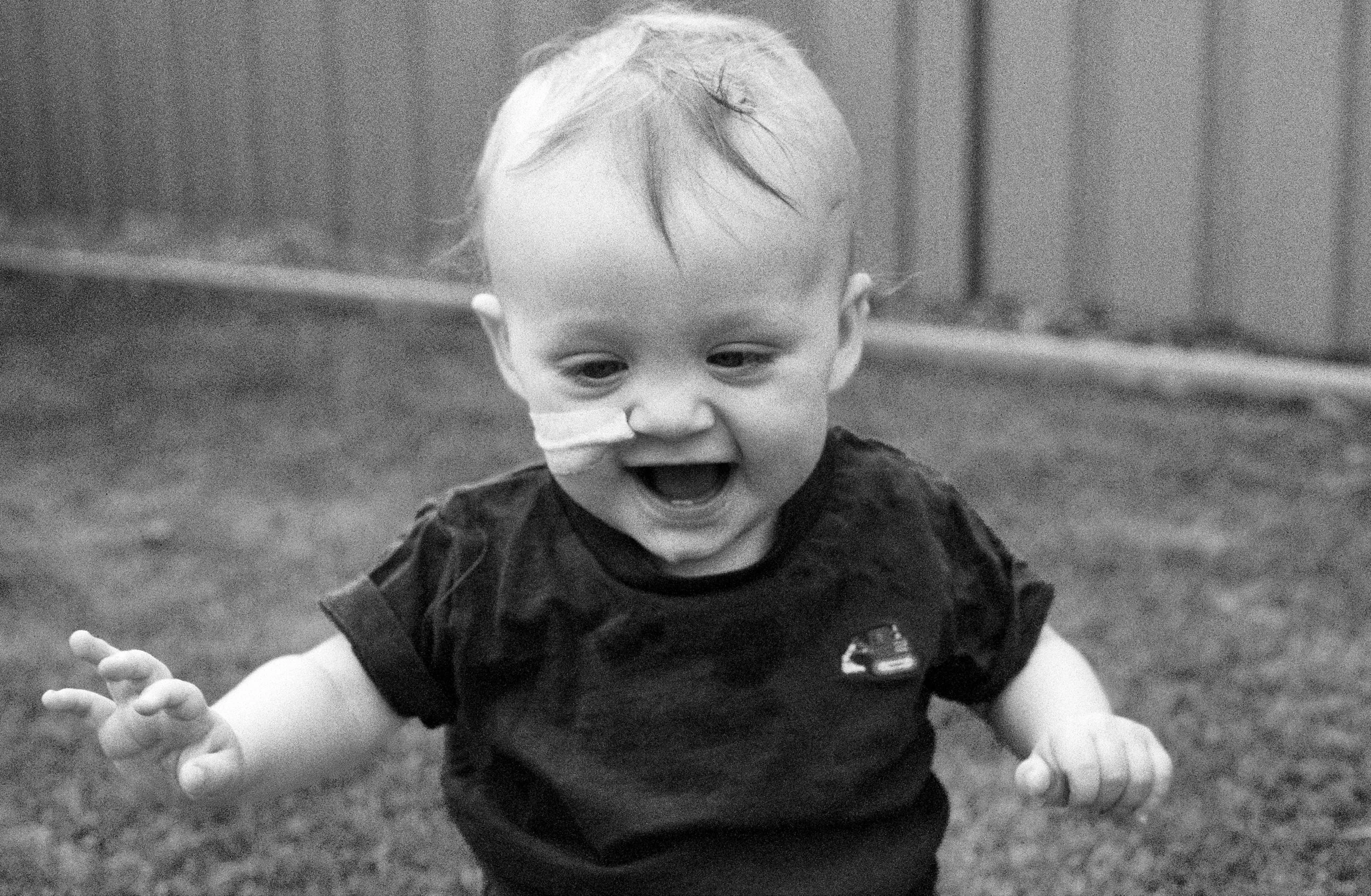
Being able to capture Pat with his tube has been really special. The tube is a big part of Pat’s life – it signifies challenges, but it also signifies triumph. When I look back on the photos of his early days with an NG tube, I see so much more than a tube. I see the most beautiful little boy who has taught me more than I ever could have imagined. I see a family that has fought for him every step of the way. I see strength and resilience, and I am absolutely in awe of him. Every part of him.
I want to be able to capture what makes him different – what sets him apart – and celebrate that in a beautiful way. It’s my dream that, one day, I could share that platform for other families with special needs. Maybe when I am not juggling three very little babes.