
Leading with Love
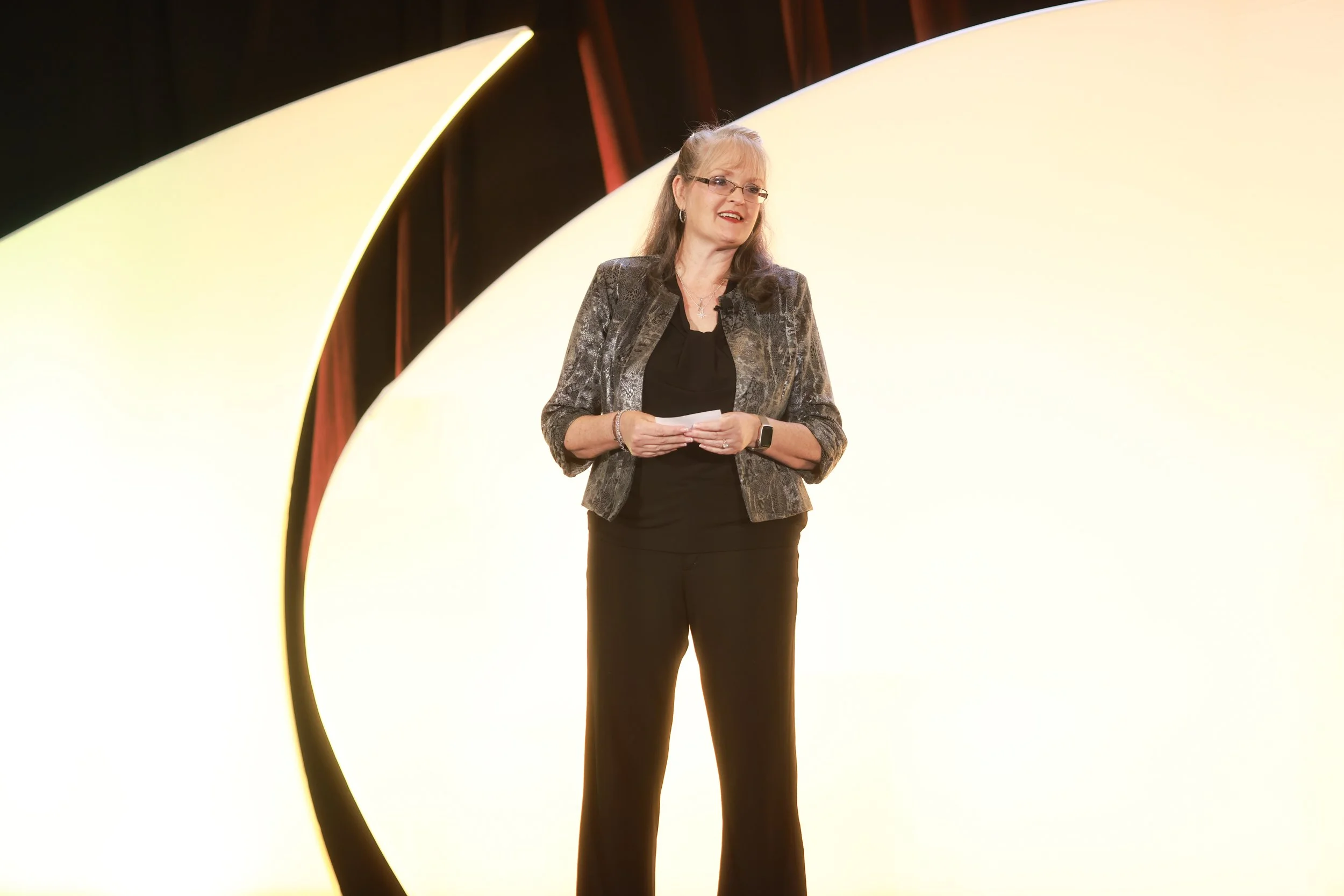
As CEO of the Oley Foundation, BETH GORE drives major change for those who rely on nutritional support. She shares how her family’s journey propelled her into advocacy and celebrates the power of connecting with others who have “been there, done that”.
When Beth Gore’s son, Manny, was put on total parenteral nutrition (TPN), doctors warned it would shorten his life. He was just two years old – and his mother was no stranger to a heart-wrenching prognosis.
Manny spent his first nine months in hospital in Orlando, Florida, before Beth and her husband, Dan, brought him home to join their family in Tampa. Like his five brothers and sisters, Manny was adopted by the Gores. And, like all of his siblings, he has complex needs.
Beth knew this baby faced significant challenges, stemming from what would later be identified as merosin-deficient congenital muscular dystrophy — a progressive neuromuscular condition that impacts mobility and respiratory function.
Doctors had given Manny one year to live – 18 months at most. A swallow study had already revealed he was silently aspirating on his feeds, so he left hospital with a gastrostomy (G) tube.
“Those first few days and weeks were really harrowing for us,” Beth recalls.
“I noticed almost immediately that Manny did not do well with tube feeds. Every time he’d be fed, his lungs started to sound wet. He sounded like he was drowning — and his big, beautiful brown eyes were begging me, ‘please don't let me drown’.“
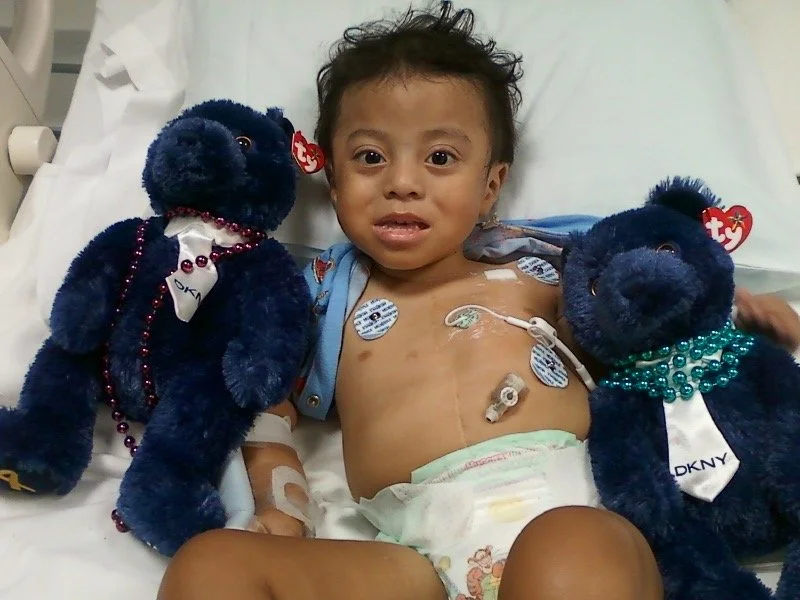
So began 12 months of trying different formulas and feeding rates. Eventually, Manny switched to a gastrojejunostomy (GJ) tube as a possible solution but, as Beth says, “he never was thriving on tube-feeds”.
“And the whole time, I felt like a failure of a mum because I couldn’t figure it out.”
Manny was two when he first received TPN, a method of delivering nutrition intravenously and directly into the bloodstream, bypassing the digestive system.
“The doctors had said in hushed tones that this was a ‘life-limiting’ decision,” says Beth.
“Then I walked into an Oley Foundation meeting and I met somebody who had been on parenteral nutrition for over 40 years. And I’m like... we’re fine!”
Manny, now 16, flourished on TPN while Beth stepped into leadership roles at the Oley Foundation, co-founded in 1983 by gastroenterologist Lyn Howard and her patient Clarence “Oley” Oldenburg, who was also on TPN. The nonprofit supports tens of thousands of people who rely on enteral and parenteral feeding, and its annual flagship conference draws hundreds from around the world.
“That’s all I needed — to see that there is life beyond nutrition support,” says Beth, remembering her first encounter with the organisation she would come to helm.
“I just needed to see with my own eyes that somebody else has learned how to navigate it. That means I can too. So, don't do it alone – that’s my advice – do it with friends.”
In Manny’s early years, while he was still tube-feeding, Beth first found those friends in the digital realm.
“We had already adopted a little girl from China, so I knew there was an online, ‘been there, done that’ group of mums for Chinese adoption,” she says. “I figured there must be something like this for tube-feeding, so I found that and started asking all the questions.”
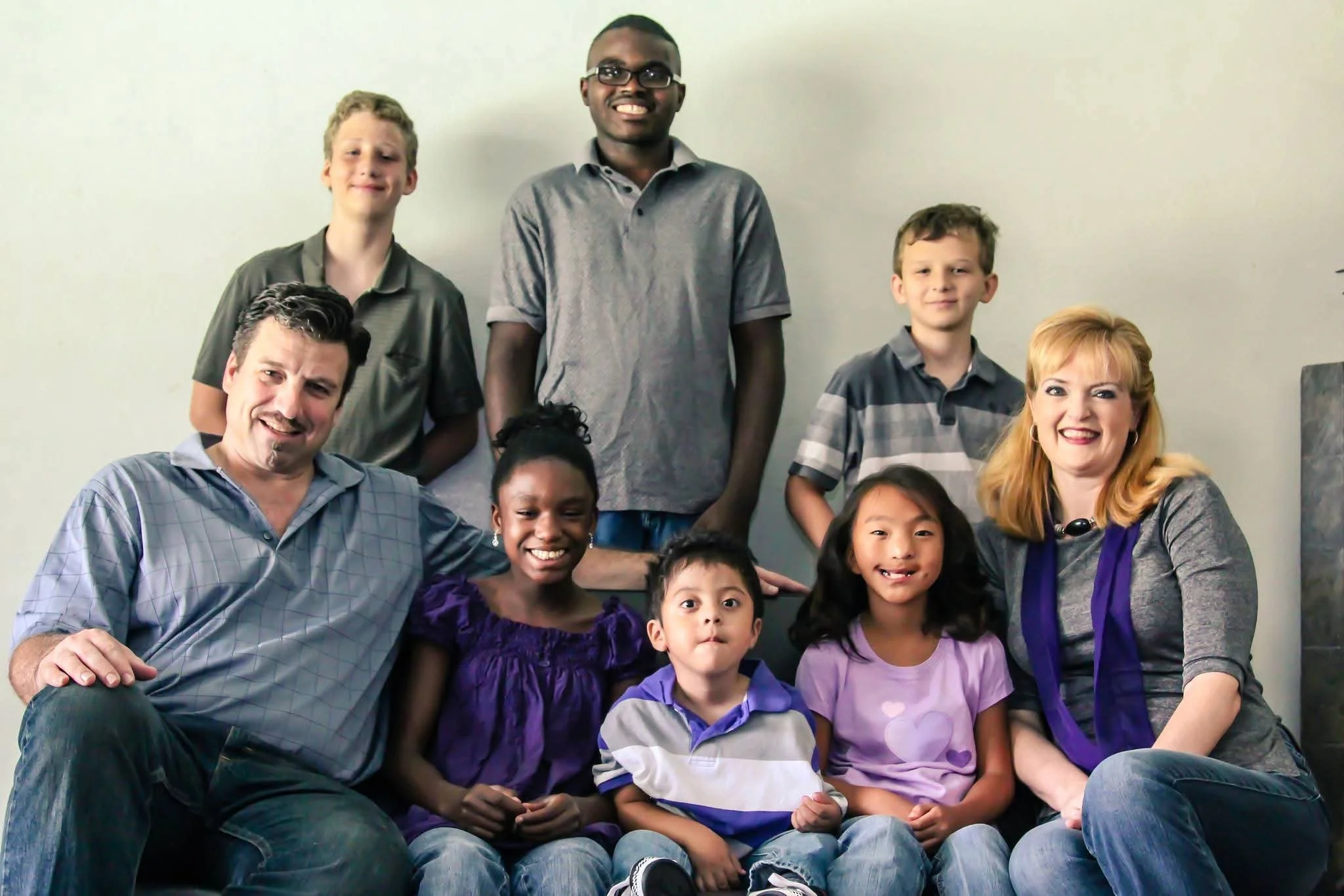
Beth’s China-born daughter, Zoe, was a teenage dream come true. At 15, Beth had read a Reader’s Digest article about Chinese baby girls being abandoned under the country’s former One-Child Policy — “and it was put into my heart, at that point, that I would adopt”.
Five years into their marriage, Beth and Dan were ready to start a family but, due to age restrictions, were too young to adopt from China.
Learning that children with disabilities in the US were less likely to find permanent homes, they began by adopting siblings Jacob and Kaley, aged two months and eighteen months, through foster care. A few years later, newborns Luke and Sam joined the family the same way, followed by two-year-old Zoe, adopted from China.
While raising five children, Beth — who holds a PhD in training and statistics — taught evening classes on the relationship-building principles outlined in Dale Carnegie’s bestselling book, How to Win Friends and Influence People.
She was also speaking with Christian church leaders, advocating for adoption and learning that many parents of disabled children had stopped attending church because they felt excluded.
“I was creating programs to help churches welcome these families when we stumbled across Manny,” she says.
Beth’s own parents were pastors. Her mother had a daughter from a previous marriage before marrying Beth’s father, who officially adopted Beth's sister when the girls were 10 and seven. A few years later, after a tragic event in their church, the family fostered a baby boy, Mark, for two years.
“That story didn’t go happily ever after, but we loved Mark with all intensity,” says Beth, reflecting on how these past experiences shaped her own version of parenthood.
“We just wanted to be a place where kids had a home and were loved. We have two African-American children, two Caucasian, one Chinese, and one Hispanic — Manny is from Guatemala — so we’re quite the United Nations family. We didn’t set out to be heroic, we just wanted to be parents and they needed family. That was why we adopted.”
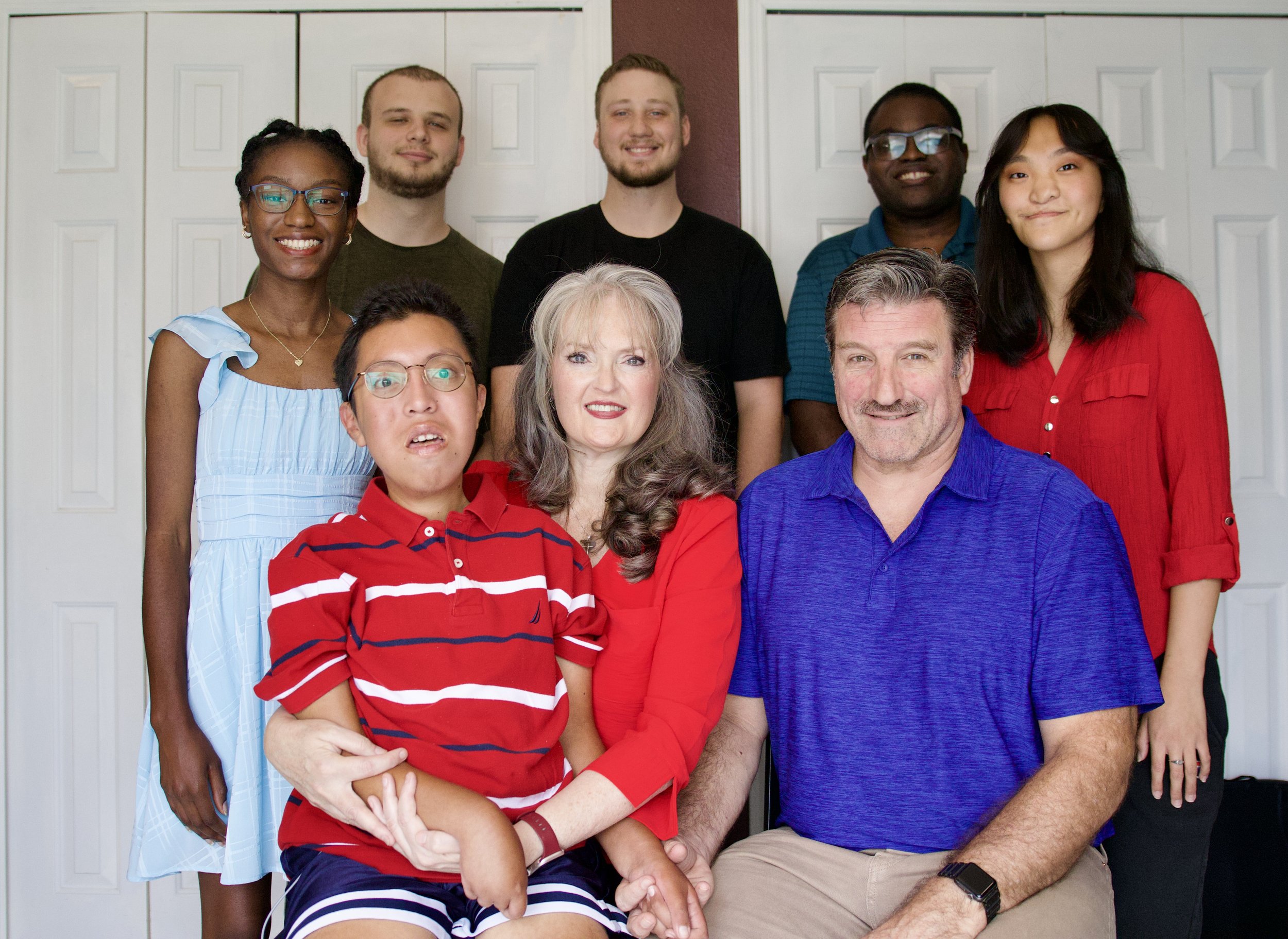
Having welcomed children with congenital conditions, renal failure, heart complications, autism, schizophrenia and bipolar disorder, Beth and Dan were confidently navigating the healthcare system and supporting a vast array of needs when Manny came along.
“We felt like we had a fate to bring in a more complicated child — we thought we knew a thing or two, but we were surprised,” says Beth.
She took time out from work while Manny found his way from tube-feeding to TPN — a process which involved several lengthy hospital admissions and health scares. On a single income, mounting medical bills and nutrition expenses put huge financial strain on the Gores, almost costing them their home.
Amid all of this, in an effort to keep germs at bay, Beth and Dan also homeschooled all six of their children which, as Beth says, “is a whole other story”.
Once Manny turned a corner on TPN, Beth worked part-time as a patient safety advocate before joining the Oley Foundation — first as president, then as executive director and, from 2022, in the role of CEO. Here, she represents families like her own, campaigning for affordable access to essential nutrition supplies and therapies.
“There are things that, as a mum, I wish I didn't know but as a CEO, I do know — and it’s a burden,” says Beth. “The biggest fight right now in America for long-term chronic illness is the reimbursement of services that are necessary in order to keep the people alive.”
Education is another focus for the foundation — one that also runs deep for Beth. Soon after Manny came home with his G-tube, a homecare nurse arrived to teach Beth “everything and anything” she needed to know.
The nurse kept her car running while handing over a package of supplies, then bolted out the door.
“That was my education for tube-feeding — and I’m like, what the…?” Beth recalls.
“We’re working nationally with organisations that are in charge of patient discharge and patient education, looking into, how do we partner earlier and sooner in the process in order for patients to safely go home?
“Oley is very much about making sure that everybody has access to all of the information. We're not going to push one organisation over another, or one process over another, or one therapy over another, or one type of formula.
“We’re pushing for every person to have everything they need in order to make a good, educated decision for themselves.”
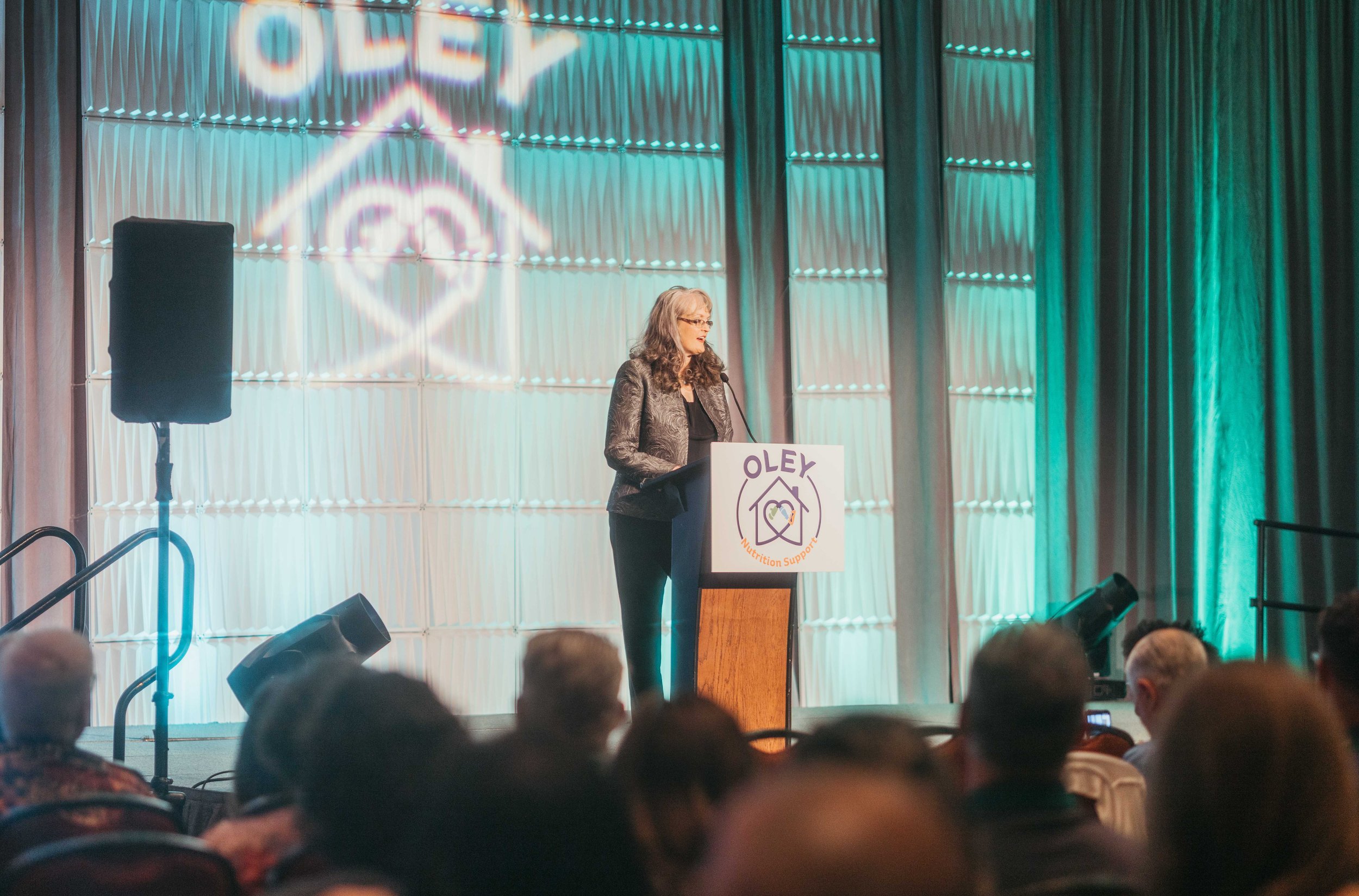
This July in Madison, Wisconsin, the Oley Foundation’s annual conference will once again bring together members of the tube-feeding and TPN community alongside caregivers, medical professionals and innovators in the sector.
The 2025 event had 50 exhibitors including newcomers Tubie Tech – a family business building 3D-printed, USB-powered feeding pump chargers.
“I thought that was really cool,” says Beth.
“Another highlight was the keynote address by [Canadian wheelchair fencing Paralympian] Trinity Lowthian, who spoke on dualities because, at any given moment, there are highs and lows. And she really captured that in her journey to Paris as the only Olympian or Paralympian who's ever been on TPN.”
This was Trinity’s first experience of the Oley Foundation.
“She said, ‘I never knew this kind of community existed’,” says Beth. “Now, she’s hooked for life.”
While the speakers, stories and educational sessions are world-class, Beth credits the lasting impact of these conferences to what happens “in between” the scheduled events.
“It's riding up in the elevator,” she says. “It’s sitting at lunch with somebody who’s “been there, done that”. There’s nothing like finding your people — and the number one thing people say about Oley is, ‘I wish we had found you sooner in my journey’.”
To families who are new to enteral or parenteral nutrition, Beth says “you are not alone”.
“Early on I would think, if only I had gone to a better hospital. If only I had articulated things better, if only I had found a better doctor, hospital, or insurance — or if I had fought harder — and that's the number one thing people struggle with. They feel like they're doing something wrong. They feel like they’re failing when the truth is, this is a really hard world to navigate.
“It’s challenging even for the most talented specialists — and there aren’t enough specialists in the world who focus on this community. But there are amazing people and families across the globe who would love to come alongside you and say, ‘you got this’.”