

Photography by Christopher Bone (Hay Festival)
For author and advocate BETHANY HANDLEY, nature is a daily reminder that her life hasn’t stopped because of illness.
WORDS // HAILEY HUDSON
Bethany Handley’s days are full of joy – waterskiing, writing poetry, laughing around the table with her family.
They’re also full of medical routines that are completely foreign to most people – setting up feeds, caring for her ileostomy, using a wheelchair full-time to get around.
Today, Bethany integrates both sides of her life with grace. “We need to normalise and celebrate that the medical sides of our lives aren’t divorced from our everyday,” she says.
But it’s taken her time to come to this perspective.
“Over the years, I’ve become more accepting and found more joy in my illness and more pride in being disabled, and just learnt to co-inhabit my body with my illnesses.”
Bethany, who lives in a rural area of South Wales, is an award-winning author, poet, and disability activist. She describes becoming seriously ill as a plot twist she never asked for. But without it, she wouldn’t have started writing, slowed down in nature, or developed the lens through which she now sees the world.
Advocating for her needs
In 2019, Bethany was a university student when she began developing gastroparesis. Her medical team didn’t do the testing she needed, and without help, she kept getting sicker. Her weight loss and malnutrition became so severe that she eventually had to drop out of university. In spring 2024, Bethany had an emergency hospital admission after a month of not being able to keep down food.
“They said that I didn’t look skinny enough to need a feeding tube or any support, that I still had muscular arms,” she recalls. “I’m also a full-time wheelchair user and paraplegic, so of course I had muscular arms. My arms are how I get around.”
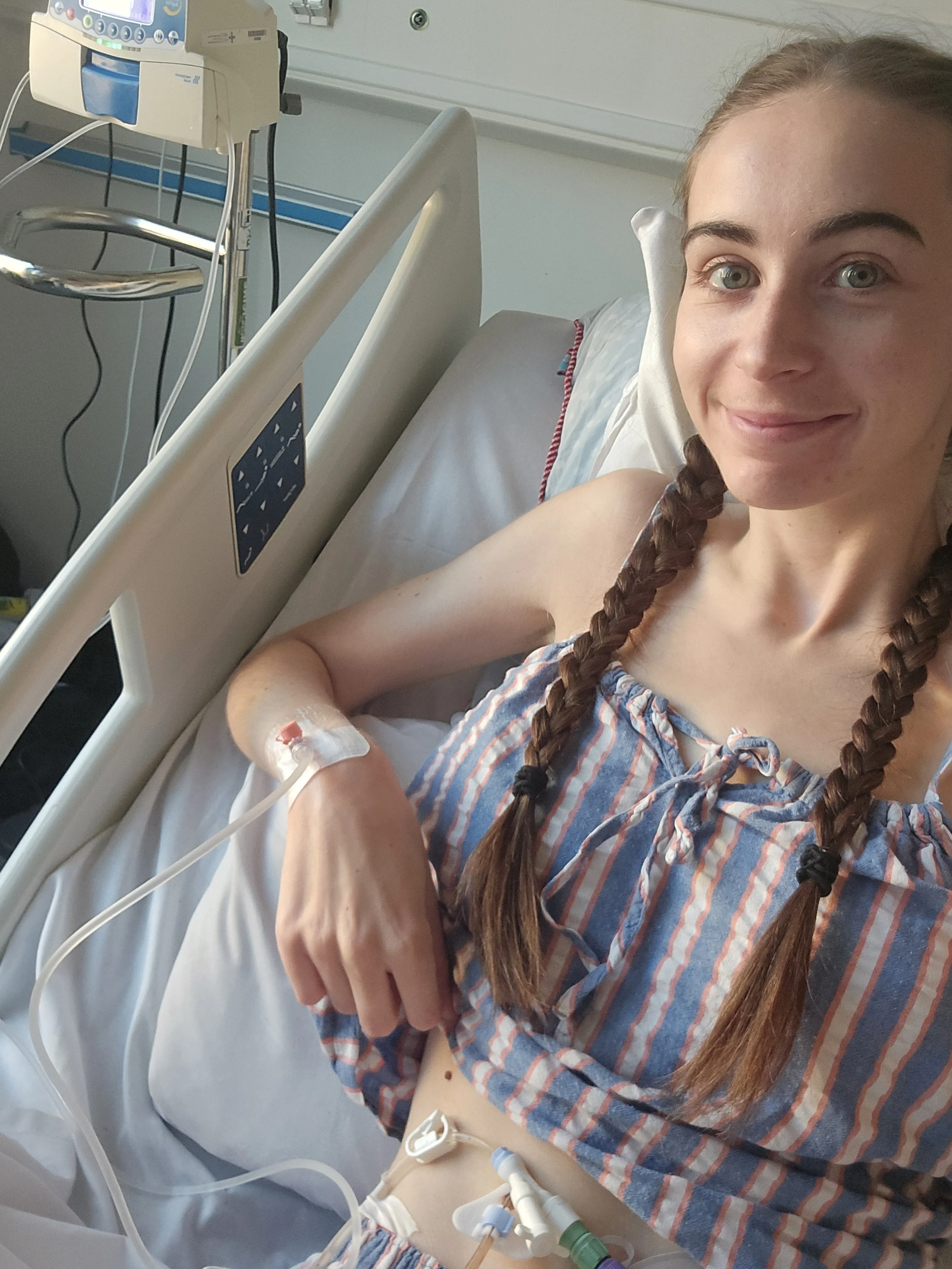
Bethany ended up crossing the border into England to get emergency care. She had a nasojejunal (NJ) tube placed and was fed through nasal tubes until getting a percutaneous endoscopic gastrostomy-jejunostomy (PEG-J) in September 2026. She has also been on total parenteral nutrition (TPN) on and off, and received an emergency ileostomy in 2025 due to her intestinal dysmotility.
“I’ve had to fight for my PEG-J,” Bethany says, explaining how her doctors know very little about tube-feeding.
“Public speaking is a massive part of my career, and I was losing my voice and having nosebleeds and so much pain from having a [nasal] tube in. And my consultant couldn’t understand that it wasn’t an aesthetic thing.”
Bethany “couldn’t have cared less” that she had a tube on her face. In fact, she says, she was proud of it: “I think my body’s never been sexier.”
She looks at her medical devices and sees resilience, survival and the adventures they enable. But with a nasal tube, she was undergoing endoscopies every few weeks, frequently experiencing a blocked tube on weekends or holidays. She felt her doctors didn’t understand how traumatic her experience was and how the NJ tube was making it more difficult for her to live her life.
Writing toward joy
As a professional writer, Bethany – who doesn’t get enough calories from her feeding tube alone – finds that her medical team struggles to understand how malnourishment affects her work.
“Having that brain fog because of malnutrition, it’s really frustrating,” she says. “[My medical professionals] don’t understand that impact on quality of life, not being able to think as quickly or to sustain thoughts, or how much even an hour of writing can be exhausting if you haven’t got enough calories.”
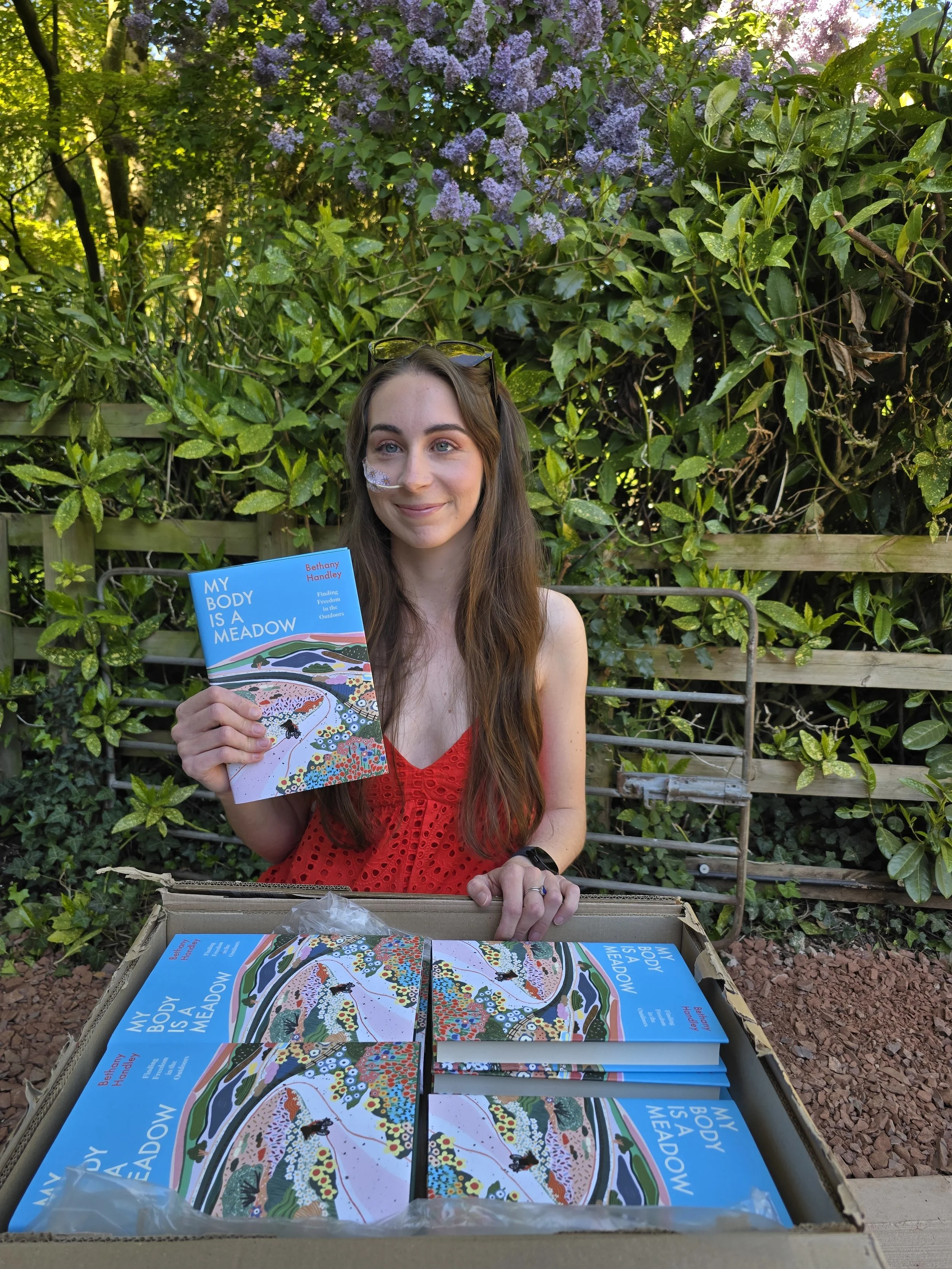
Despite these issues, Bethany, who started writing poetry when she began accumulating chronic illnesses in her teens, writes when she can find “snatches of time and energy”. Her debut non-fiction book, My Body is a Meadow: Finding Freedom in the Outdoors, was longlisted for The Wainwright Prize for Nonfiction 2026 and was named one of the top climate books of 2026 by The Conversation.
The title of Bethany’s new book, which reads like a poem in and of itself, was important to her. She wanted to get the language just right.
“Being seriously ill and facing scary complications, I find a lot of people try and encourage me to fight my body and to fight my illness, which feels so counterintuitive at a time when I just want to give my body a big hug and shower myself in love,” she says.
Bethany wanted to show that disabled bodies kept alive by tubes, TPN, or other methods of support are still natural bodies – “just as natural as the meadow I live beside”.
“To fight my illness is to fight my body,” she says, “which is so bizarre at a time when my body needs more love than ever before.”
Malnourishment, Bethany says, makes it exhausting to keep going. As a counterweight, she tries her best to be at peace with illness, to prioritise “what makes my heart sing”, and to find joy in the everyday through the poetry she writes.
“Outdoorsy doesn’t have a look”
Growing up in rural South Wales, Bethany spent her childhood on mountains, beaches, ancient woodlands, meadows and rivers.
“These landscapes were family members that raised me… [they] forge the bedrock of my identity,” she says.
When she got sick, being removed from the outdoors was a difficult blow. Bethany remembers one hospital admission where the view out her window was a flat concrete roof.
“But there was still water evaporating off the roof, and there were still seagulls,” she says. “And even that just made me feel more connected to the rest of the world.”
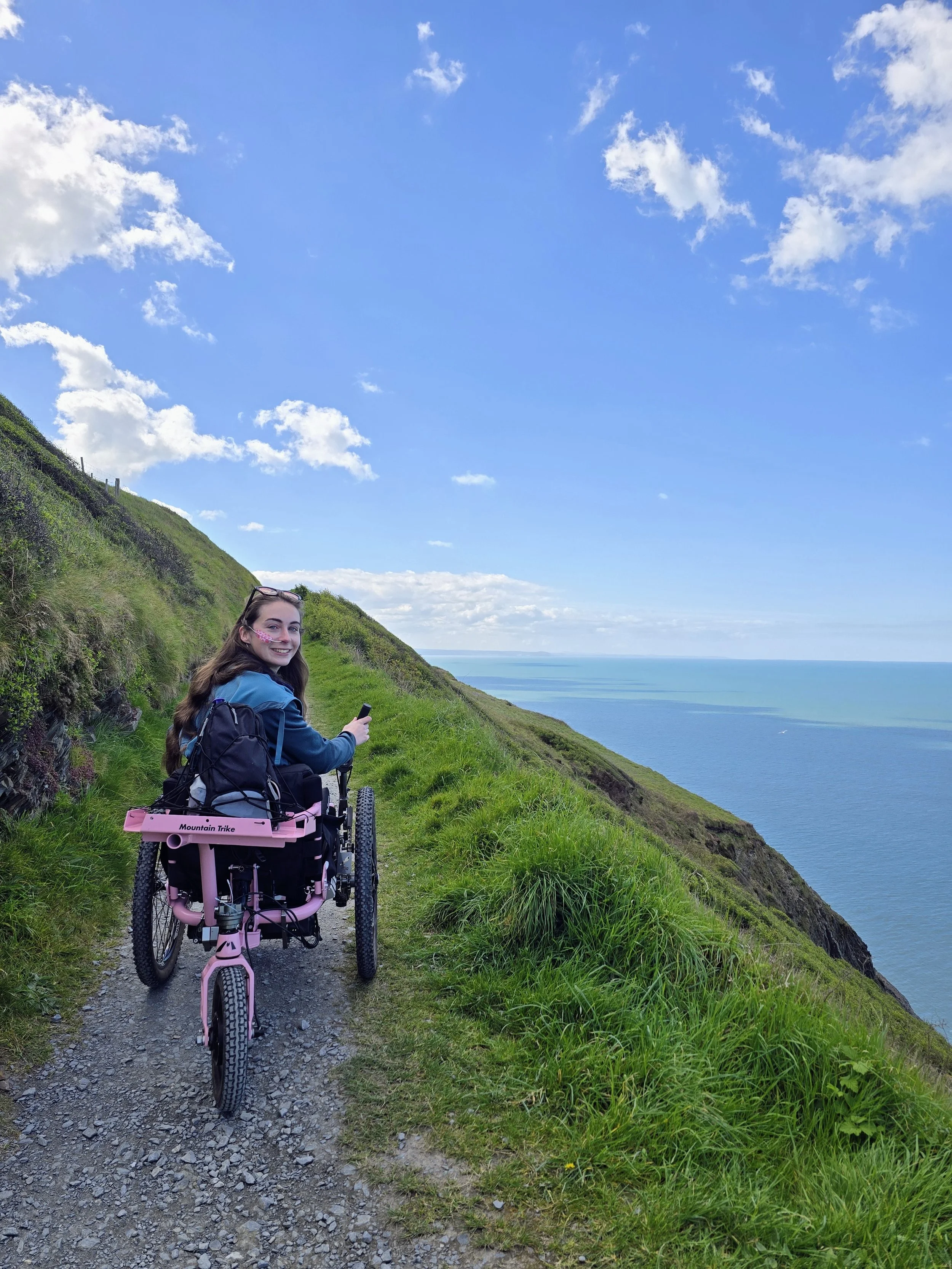
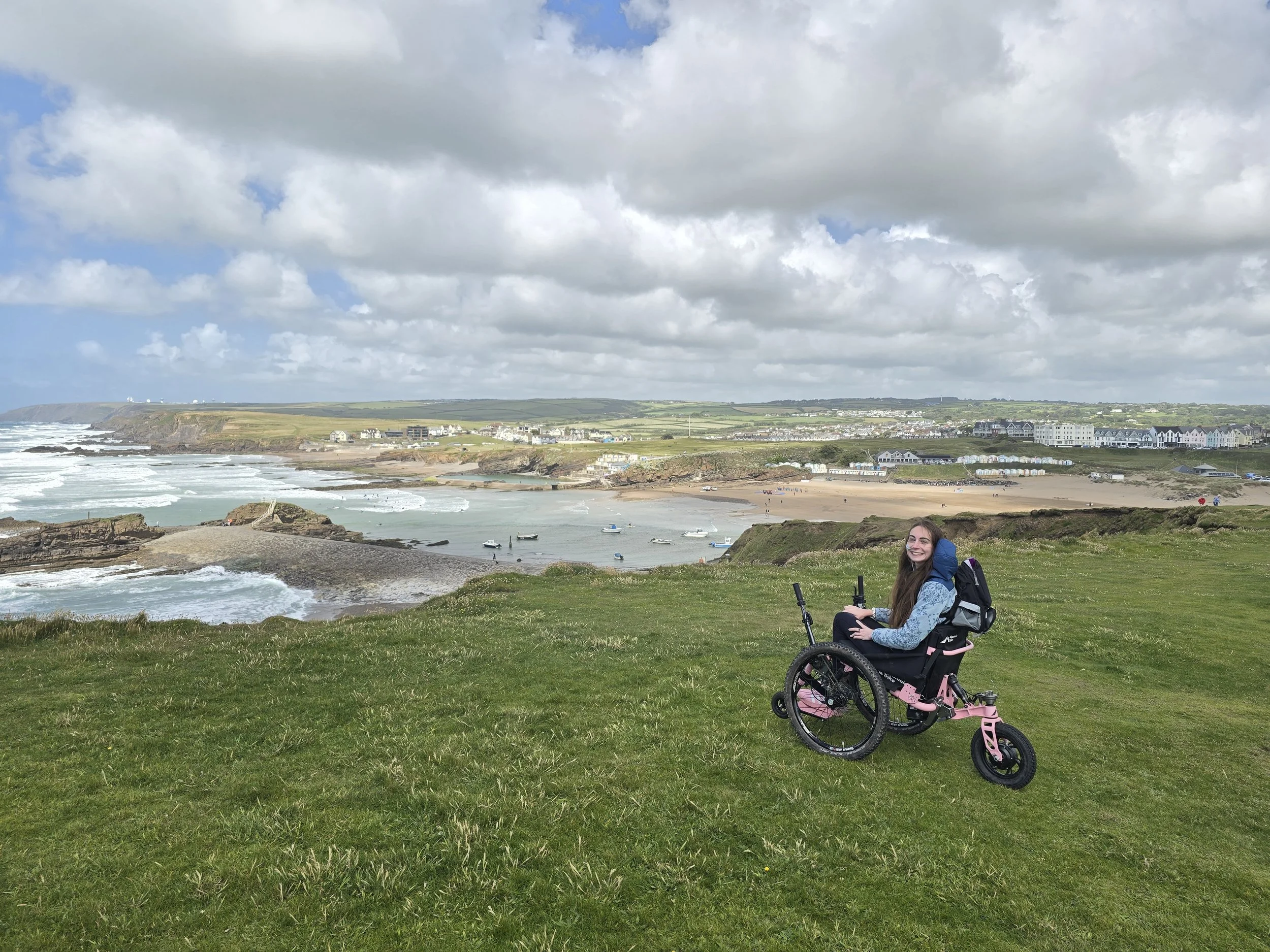
During a time when it felt like illness had put her life on pause, watching nature out the window reminded her the world was still moving and she was still part of it. And eventually, with a little brainstorming from her family, Bethany was able to get outdoors once again in her bright pink all-terrain wheelchair.
“Outdoorsy doesn’t have a look. Our medical appliances don’t just belong in hospitals. They belong on a mountain ridge or in a woodland,” she emphasises.
Since becoming a wheelchair user, Bethany has summited mountains and learned how to water ski. She secures her pump tightly to the back of her wheelchair and, until recently, taped her NJ to her face as well as tying it to her hair (she now covers her PEG-J with a waterproof dressing).
Since she makes up her own feed, it has to stay cold until she’s ready to use it, so she carries it along with ice packs and asks her partner or a family member to warm it up when it’s time to refill.
“I’m so grateful that I can have this tiny little pump and still be out on top of a mountain connected to feed. It’s pretty amazing,” she says.
A beautiful life
From getting the ward gossip from her favorite nurses, to writing poetry in the walled garden at her hospital, to exploring the outdoors with her loved ones, Bethany has mastered the art of finding joy in the small things – and the hard things. Her mindset is that even if it takes a little extra problem solving, she’s going to try her best to find the joy in every day.
“Your tube is beautiful and lifesaving and life-enhancing, and you’ve got to think about what it enables rather than what it restricts,” she advises other people who rely on tube-feeding. “Life isn’t about to get smaller.”
Recently, when Bethany was in the hospital on TPN, a nurse told her she was healthy. Bethany nearly laughed in her face. But then the nurse explained what she meant: “You’re healthy because you are loved, and where you have love, you have health.”
Bethany has been pondering the statement ever since, as she celebrates all the different forms of joy in her life.
“My family is really good at creating celebrations out of nothing. We’ve had a lot of celebrations in the hospital garden. And it’s really made me feel that life’s not on pause, that this is such a beautiful life that I’m so grateful for.”