
Super Tubie Pride
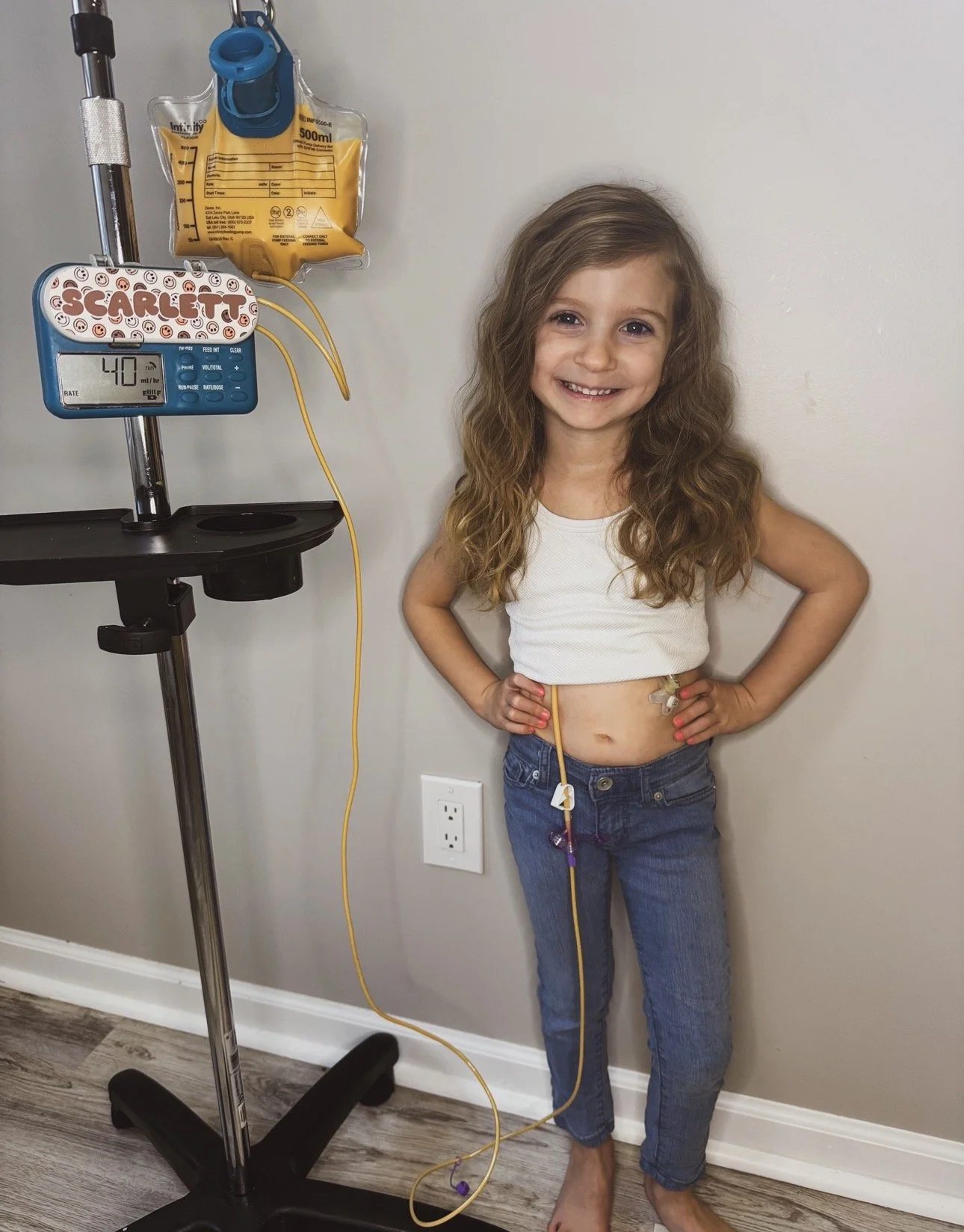
From hospital beds to ballet class — and a viral moment that captured millions of hearts — five-year-old Scarlett is redefining what thriving looks like. Her mum, Kelsey, shares their tube-feeding story.
Popsicles are the way to Scarlett Ward’s heart. A few years ago, as a wide-eyed baby with a feeding tube, her very first lick triggered a smile that continues to spark happy tears, 31 million+ TikTok views and counting.
More recently, just days before this interview, five-year-old Scarlett was dialling room service and ordering her own popsicles from a hospital bed. “We are so happy to be home, but oh my goodness, it was a whirlwind,” says Scarlett’s mum, Kelsey, from Maryland, US.
“She had a scheduled tube change that was supposed to be later in the week, and then she started having all these complications. We ended up inpatient, then we couldn’t do the procedure because her labs weren’t good enough. It was just one thing after another.”
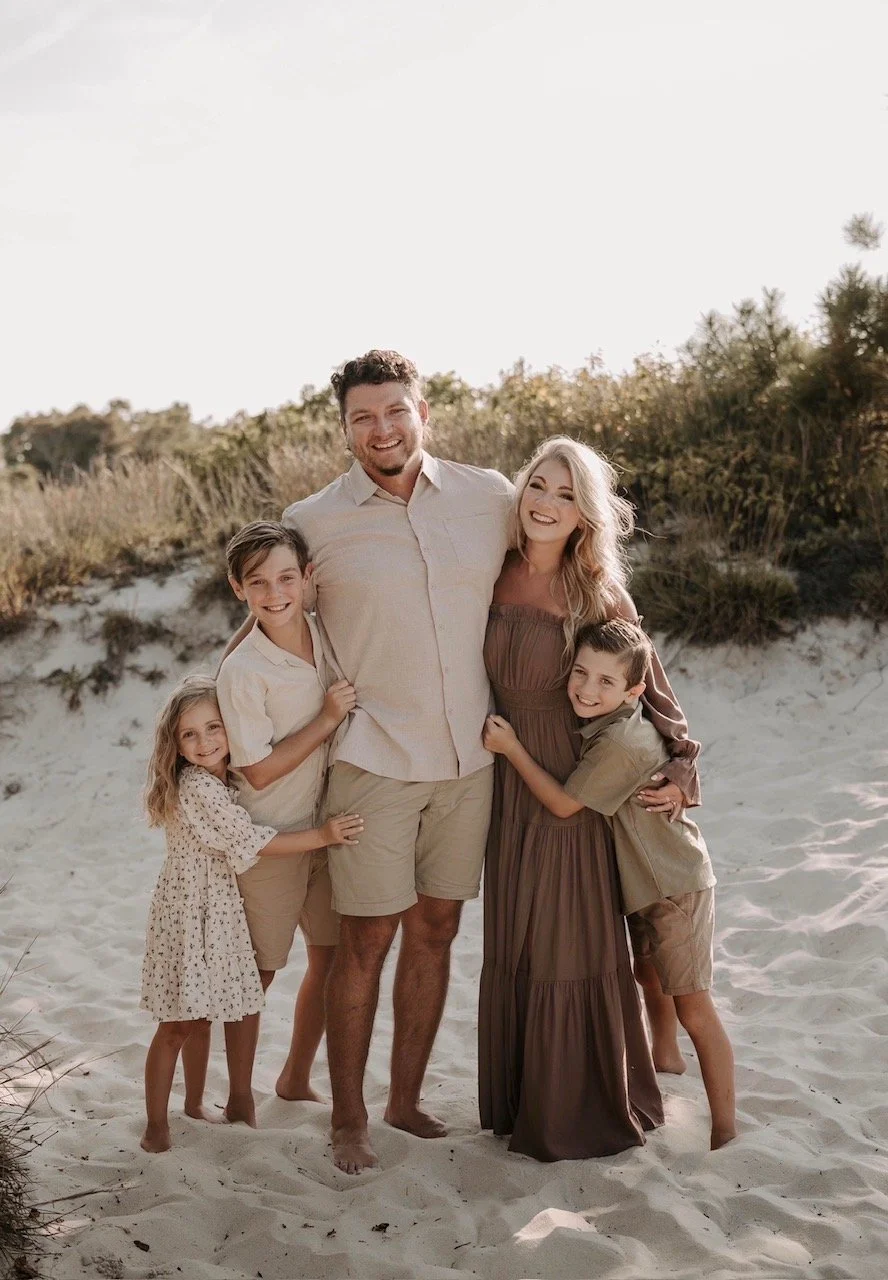
As Scarlett and her family – including older brothers Jackson, 10, and eight-year-old Ryder – settle back into normality, Kelsey reflects on a truism she’s held close while tube-feeding her daughter since she was a newborn.
“Grief and gratitude can coexist,” she says. “You can have a day where you just have to cry it out and be like, this is not what I envisioned, but also be so grateful that tube-feeding exists because it’s keeping her growing and thriving and having a wonderful quality of life.”
Tap, ballet and tee-ball feature in Scarlett’s extracurricular activities. She’s a social butterfly, adores her friends and is doted on by her brothers, who call her “super tubie”.
All of this for a girl who, soon after she was born, was “failing to thrive”.
Photography by Molly Jane
Frequent vomiting was the first symptom of Scarlett’s chronic condition – gastroparesis, or delayed gastric emptying. She also had hypotonia and, while learning to walk, relied on a KidWalk wheelchair. Kelsey credits the fact that Scarlett can now run, unaided, to years of physical therapy and her feeding tube.
“She started with an NG tube, which was a nightmare, to be honest with you,” she says. “As a baby she would just yank it out every chance she got. We were trained to put it in, but it was traumatic for her. It was traumatic for us. It was traumatic for everyone.”
Despite this, like many parents, the option of switching to a gastrostomy (G) tube didn’t sit comfortably with Kelsey.
“Just the thought of putting a hole in her stomach,“ she says. “Little did we know it would have been life-changing for her. I wish we did it sooner.”
Having now transitioned from a G to a gastrojejunal (GJ) tube, with a stint of total parenteral nutrition (TPN) along the way, Scarlett has run the full gamut of tube-feeding experiences.
“She’s been through a lot,” says Kelsey. “We've had steps forward, steps backwards and everywhere in between.”
Kelsey, too, has been on quite the emotional rollercoaster.
“Especially in the very beginning, when the doctor was like, okay, we’re gonna be doing a feeding tube and she's gonna be going home with it. There was that initial fear of, how am I gonna do this at home, by myself? It’s overwhelming, for sure.”
Throughout it all, the online tube-feeding community has been a constant source of knowledge and support. “When you’re going through it, you feel so alone, like no one else understands – like no one gets it,” says Kelsey.
“You don’t get it until you’ve been through it. Through the trenches of hospital life to all of a sudden, your house looking like a hospital threw up all over it. Everything changes when you connect with people that get it and have been through it – who can give you advice and can tell there’s some light at the end of the tunnel.”
Kelsey is now that person for countless other families in the tube-feeding space. Across TikTok and Instagram, her social media community is nearing 140k followers.
“I feel you learn more from watching others than you do like leaving the hospital with a feeding tube… We learned more from TikTok than doctors,” she says. “That’s why we started sharing, because we want other people to be able to learn from us, too.”

Photography by Molly Jane
In amongst the tips, tricks and go-to products Kelsey has found to make tube-feeding work for her family, she also shares a full picture of life with a medically complex child. Outdoor adventures, sibling love and birthday celebrations sit alongside surgeries, hospital stays and, of course, popsicles.
Scarlett can eat a little bit orally but, as Kelsey explains, her biggest challenge is getting enough.
“We did feeding therapy for her when she was little and I truly believe it was life-changing,” says Kelsey. “A lot of kids with her condition struggle with oral aversion. She, thankfully, does not. She loves textures and different flavours. She enjoys eating. She’s just very limited in the amount she can have.”
Right now, Scarlett has nightly tube-feeds with top ups before and after school. Having started pre-kindergarten this year, she’s had no qualms around telling her peers about her feeding tube.
“As a mum, you just hope that you’ve managed to instill the confidence in them to be proud that this is their body – and to not want to change it because it helps them grow and thrive,” says Kelsey. “I feel like she really is proud of it and understands that everybody’s different – and that’s beautiful.”
As they start to explore a new treatment for Scarlett – a gastric stimulator that acts like a pacemaker for the stomach – there is hope that she might be able to transition back to a G-tube. This would mean fewer hospital stays, as Scarlett’s GJ needs to be surgically replaced under anaesthesia every six months.
“It’s exciting – and gives us some hope, especially coming fresh off an inpatient stay,” says Kelsey.
In passing that hope on to parents who are new to tube-feeding their child, Kelsey has these words of advice:
“You’re not alone. And even though it’s overwhelming, it does get easier. Also, don’t compare your journey to everyone else’s. It’s so easy, with social media, to see everyone’s highlight reels with organised medicine carts. But it’s important to remember – especially in those early days, when it feels like the world is crashing down around you – that everyone’s journey is different.”