
Deaf, Autistic, Tube-fed and Chronically Lovely
Why this advocate keeps speaking up, despite the cost.
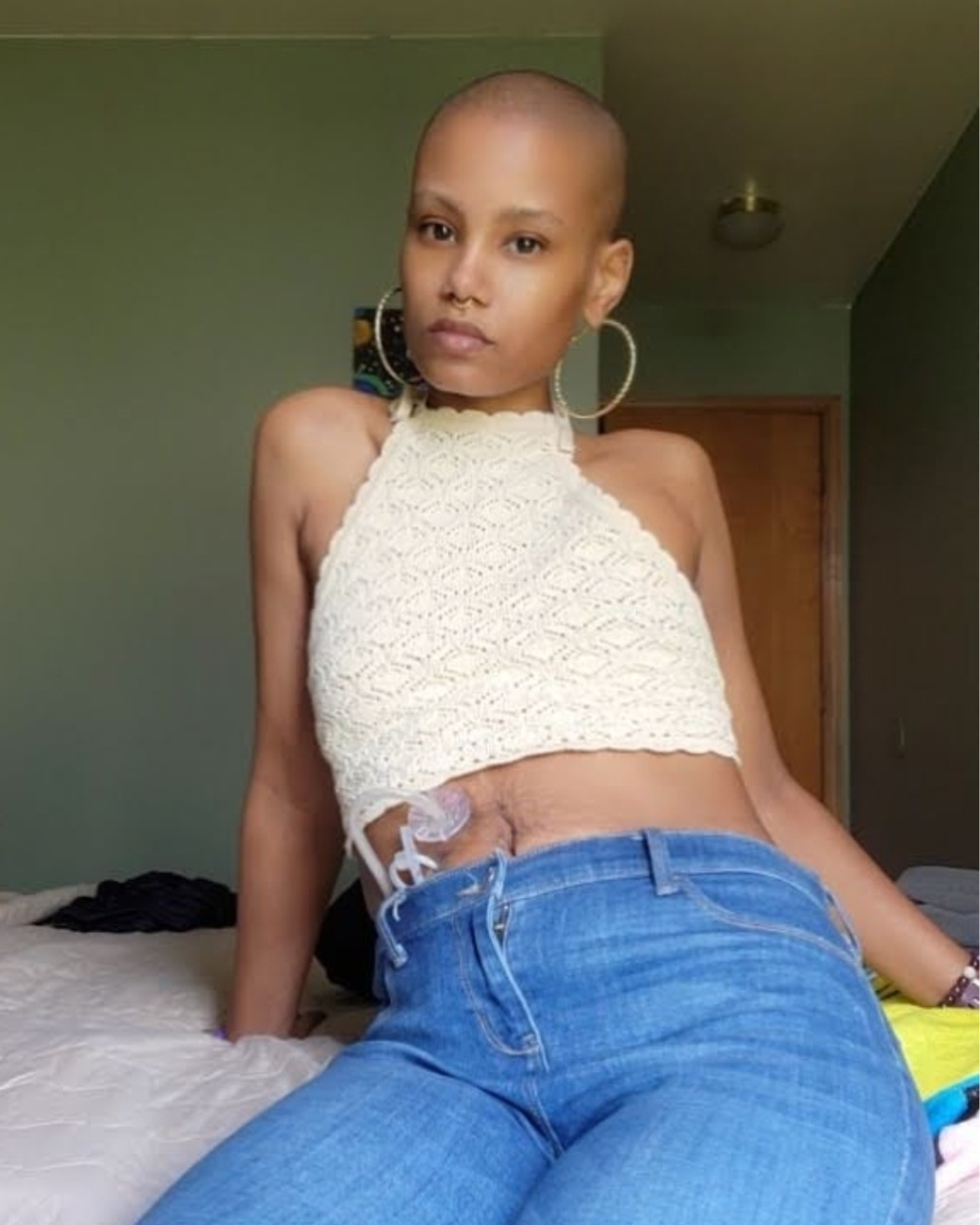
Genesiz Campbell describes herself as painfully shy. When she had a feeding tube placed in her stomach she was surprised to find that, for the first time in her life, she felt comfortable – even confident – about flaunting this part of her body.
“I never wanted to show my stomach before having the surgery,” says the New York-born, Virginia-based mother of two. “In a way, having the tube helped me not care what people thought of my stomach and gave me the confidence to show it off. I live in crop tops now.”
Known on social media for her sign-language-delivered candour around living with disabilities and chronic conditions, Genesiz is Deaf, Autistic and, due to having gastroparesis, tube-fed. A typical day sees her heading to medical appointments, hooking up to her feeds, cooking for her teenage son and daughter, and caring for their family dog.
“When I’m home, I like to spend time with my kids by doing something crafty, watching our favourite shows, or playing video games,” she tells The Blend. “I like to draw and read, and I write poetry. My favorite genre to read and watch is horror. My favourite thing to draw is octopuses.”
While mysterious, octopuses are known to be agile problem-solvers. Much like her preferred subject to sketch, Genesiz has had no choice but to adapt to challenges and find her own answers.
She’s had trouble eating for as long as she can remember. In 2016, she was diagnosed with Helicobacter pylori (H. pylori) and melanoma, the latter requiring a partial amputation of her right pinky finger. Her stomach issues worsened the following year, after she completed treatment.
“No one really knew what was causing my digestive failure until 2020. I had suggested gastroparesis to my stomach doctor, who then proceeded to say, ‘you are not a young, white woman, so you couldn’t possibly have it’,” she recalls.
“He told me I was ‘young and pretty enough’, so I probably just had an eating disorder. I had to fight with him for months just to get testing, which was positive for gastroparesis.”

Genesiz has long been advocating for herself in medical settings.
Her Autism diagnosis has been described by one doctor as “dubious” and she’s often told she speaks “too well” to be Deaf. In one appointment, while using transcription software on her phone, she was asked to remove her hat and reveal her cochlear implant as “proof” that she wasn’t recording the consultation.
“Doctors will ignore you, discredit you, try to intimidate you and ignore your request sometimes, but you know your body, so speak up. Keep pushing!" she says, offering her advice for others navigating healthcare systems.
“I had to wait eight years for the hospital to start providing me an [American Sign Language] interpreter because they said if I can talk, I don’t need one, even though it says I’m Deaf in my chart.”
Genesiz didn’t have an interpreter when she received her first feeding tube as an adult – a nasojejunal (NJ) tube – so she wasn’t made aware of what was going on.
“The placement was very traumatising,” she recalls. “They were very rough with me, yanking it in and out because it kept coiling in my throat and stomach. Then when I got home, it didn’t work when the nurse came to show me how to use my pump.”
Genesiz called the hospital to let them know her NJ wasn’t functioning, only to be told she needed to have it replaced. She refused, insisting instead on having surgery to place a gastrojejunostomy (GJ) tube which, after frequently flipping and wrapping around her stomach, was later replaced by separate gastrostomy (G) and jejunostomy (J) tubes.
After five years with both, today, she just has a J-tube. And what goes through it has been a whole other story of trial and error with her dietitian and GI doctor.
“My team isn’t sure what to do with me. So it’s me figuring it out and then letting them know what I am doing,” says Genesiz, whose conditions include a type of mast cell dysfunction and heart failure.
“I have tried so many formulas over the years, but I couldn’t tolerate them long-term. Recently we switched to a hypoallergenic formula for babies and toddlers called Neocate Splash. I use detox tea with my formula to help flush out any extra fluid my body may be holding on to.”
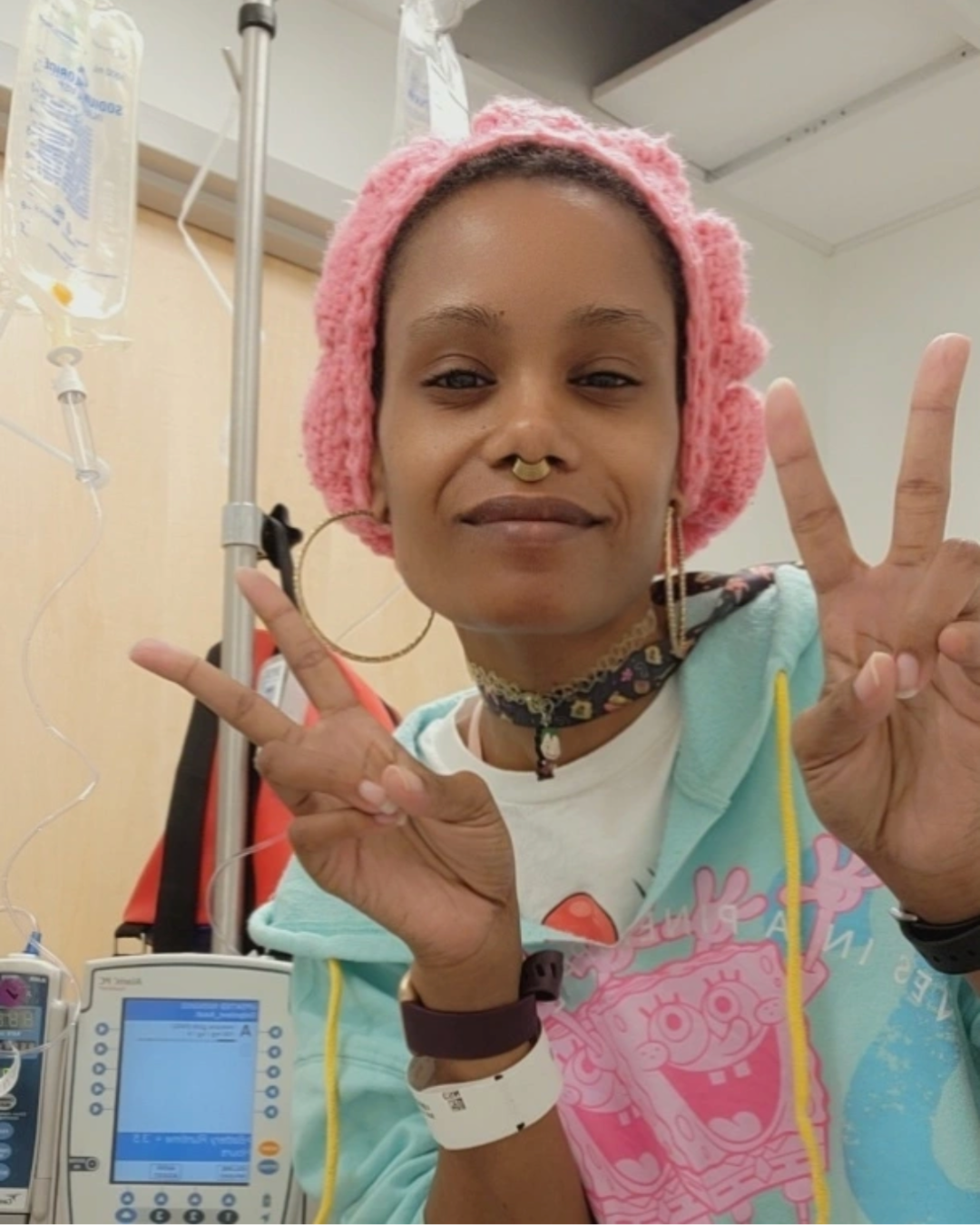
Genesiz, born Shi’Quana Campbell, had her first feeding tube as a premature baby in a Brooklyn hospital. At age three, soon after being diagnosed as Autistic, she was adopted. But Genesiz wouldn’t learn she was adopted, or Autistic, until she was 24.
“It was difficult finding out the circumstances of my birth and why I am now chronically ill and disabled, and not knowing my family health history has made it hard to diagnose and treat my illnesses,” she says now, at 38.
“When my adopted family found out I was disabled and needed tube feedings, I was called ‘disgusting’, was told ‘no one wants to see that’, and that ‘I just need to try harder to eat’. It was very hard to hear that, especially so early on, when I was trying to get used to this new appendage attached to my body, and how much I was already struggling with body image.”
Genesiz shares some of her experiences through social media, on both Instagram (as @chronicallylovely) and TikTok, to raise awareness and connect with the tube-feeding community – “where we can learn from each other”. But she understands why others might be hesitant to do the same.
“People leave me comments about how I’m not elderly or at the end of life, so why do I have [a feeding tube],” she says. “When I try to explain that you can live a full life with a tube, and there are many circumstances where someone might need a tube, I get a lot of hate for addressing those comments.”
Even without the external, unwelcome noise, medical challenges take a mental toll.
“I get through it by talking with my therapist and writing about my feelings. Deep breaths and keeping one foot in front of the other,” says Genesiz. “Not every day will be a good one, and that is okay. I always try to feel my emotions when they come, and then release them. I try not to stay in the darkness too long.”
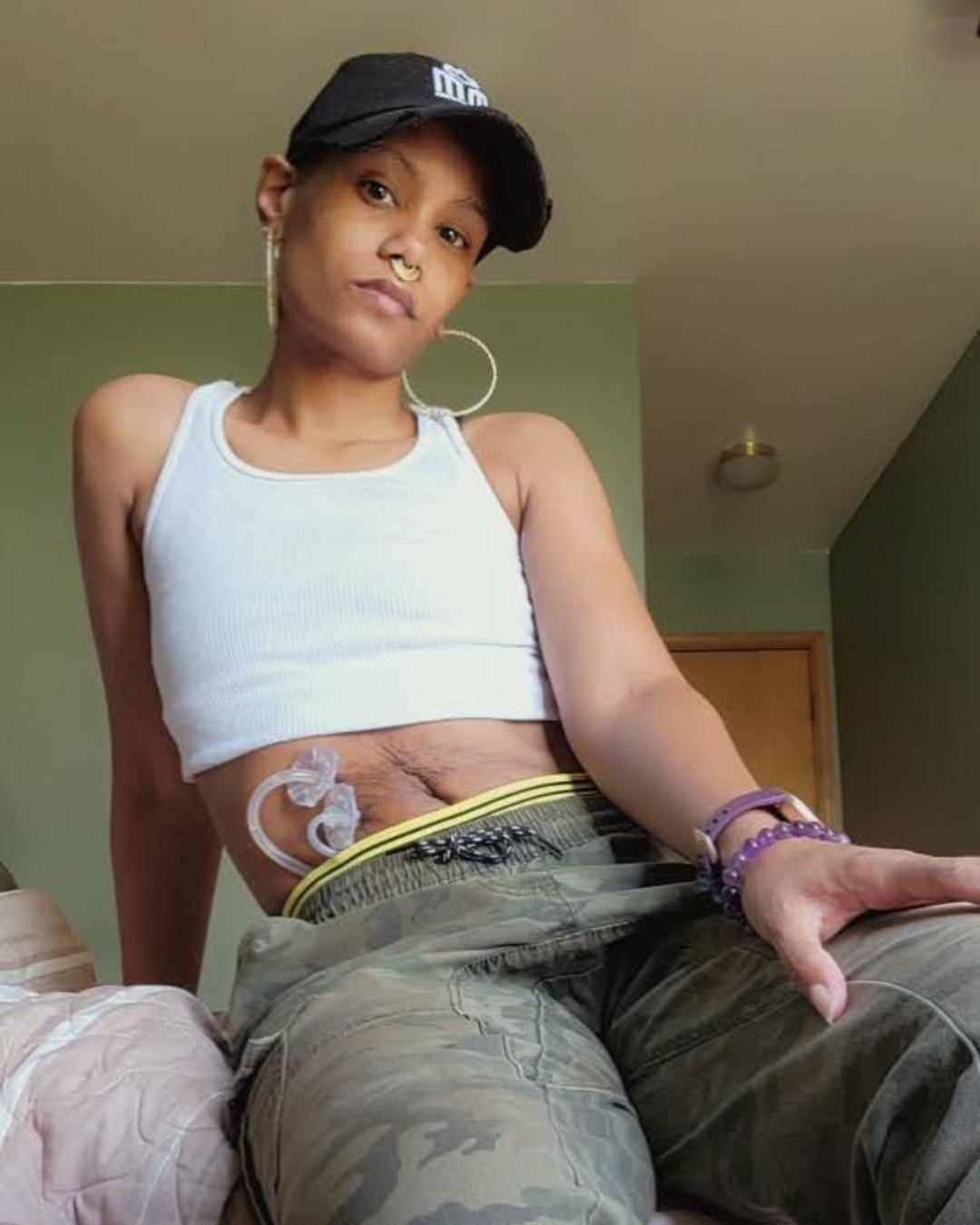
Negative interactions haven’t stopped Genesiz from telling her story – by way of her social media content, writing and, in 2025, being part of a PBS documentary on Autism in rural Virginia that went on to win an Emmy. Inspired by her love of plants, another creative pursuit sees her learning all she can about homesteading – a lifestyle centered around self-sufficiency and connection to the land.
“One of my dreams is to own an accessible homestead one day,” she says. “My other dream is to become a model for people with disabilities, although I am painfully shy.”
Her words of comfort for anyone new to tube-feeding are, “it’s okay”.
“It’s strange, it’s new, and it’s just another tool in your toolbox to keep you healthy and strong. Your tube is different, but it’s not bad, and it is helping keep you alive to see another day. Soon enough, it becomes second nature and you won’t even give it a second thought once you get the hang of your routine – and you will find a community. Stay strong. Tubie strong!”