
Tubes and All
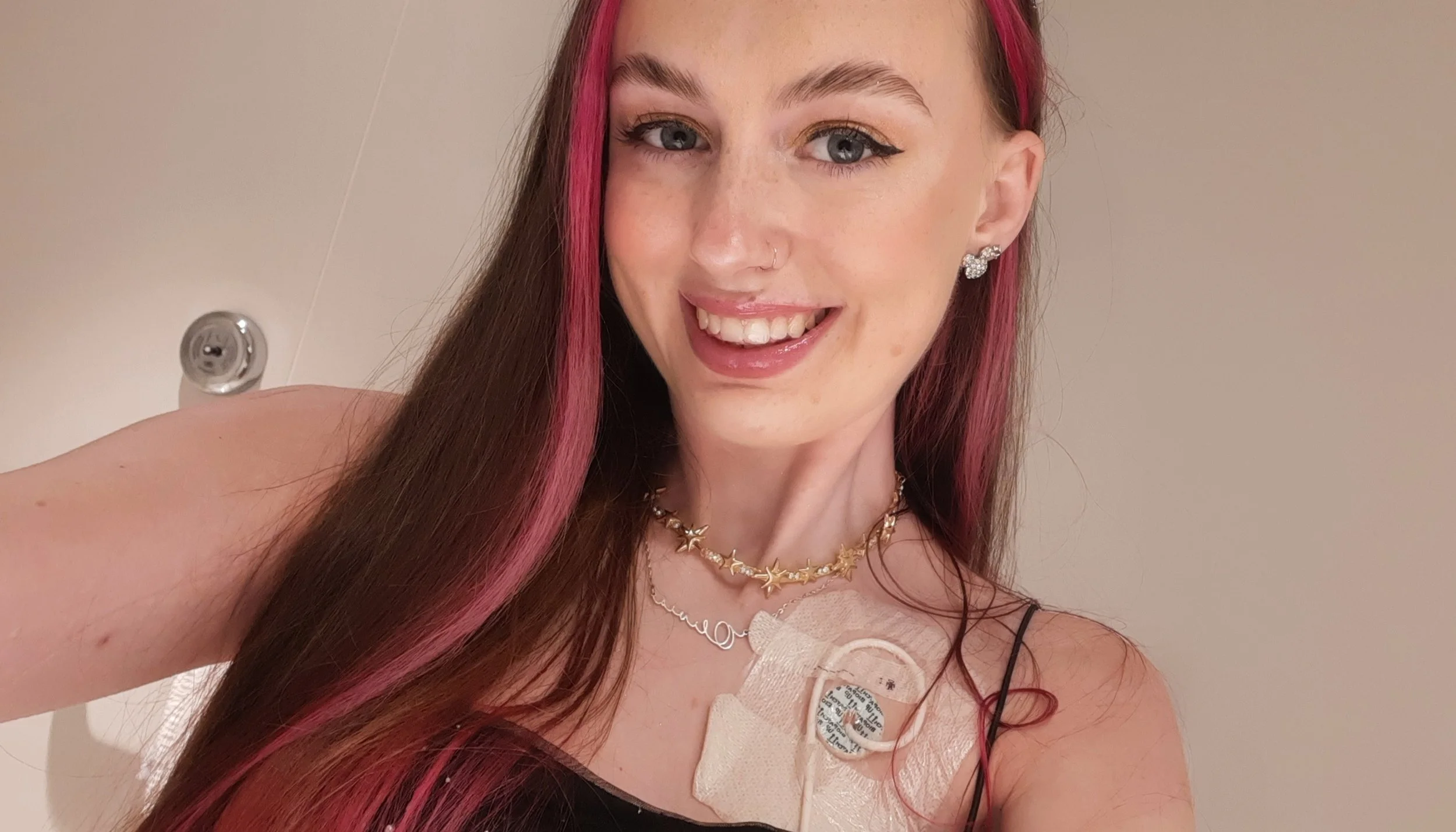
Liv used to hide her feeding tube. Now she has a six-figure following because she doesn’t.
WORDS // DANIELLA DOUGHAN
Years ago, when Liv first joined Instagram, she wasn’t trying to build a following. She was looking for connection.
“I just wanted to find other people going through something similar to me,” she says over video call, from her home in the UK.
Living with chronic illness from a young age, Liv felt isolated and unsure whether anyone else truly understood what she was experiencing. Finding an online community didn’t just give her answers, it gave her belonging. Over time, that community helped carry her through some of the hardest years of her life.
“Before I joined the online community, I thought I was the only person in the world being tube-fed. I’d never heard of it before. I was like, ‘surely nobody else is going through this.’
“Getting to speak to other people who are tube-fed has been so beneficial for me. They’re people who truly understand what you’re going through and can relate – it’s a different level of understanding.”
What Liv didn’t expect was that, years later, she would be the one offering that same sense of connection to others. Today, she shares her life online as @medically.liv, with around 140,000 followers across Instagram and TikTok.
“It’s still mind-blowing to me,” she admits. “I never imagined this many people would be listening.”
How feeding tubes became part of Liv’s story
Liv has lived with gastrointestinal issues since she was three years old, but was able to eat and drink “normally” for most of her childhood and teenage years. Everything changed when she was 17.
“I stopped being able to tolerate food and drink orally,” she explains. “By the time I was 18, tube-feeding became necessary.”
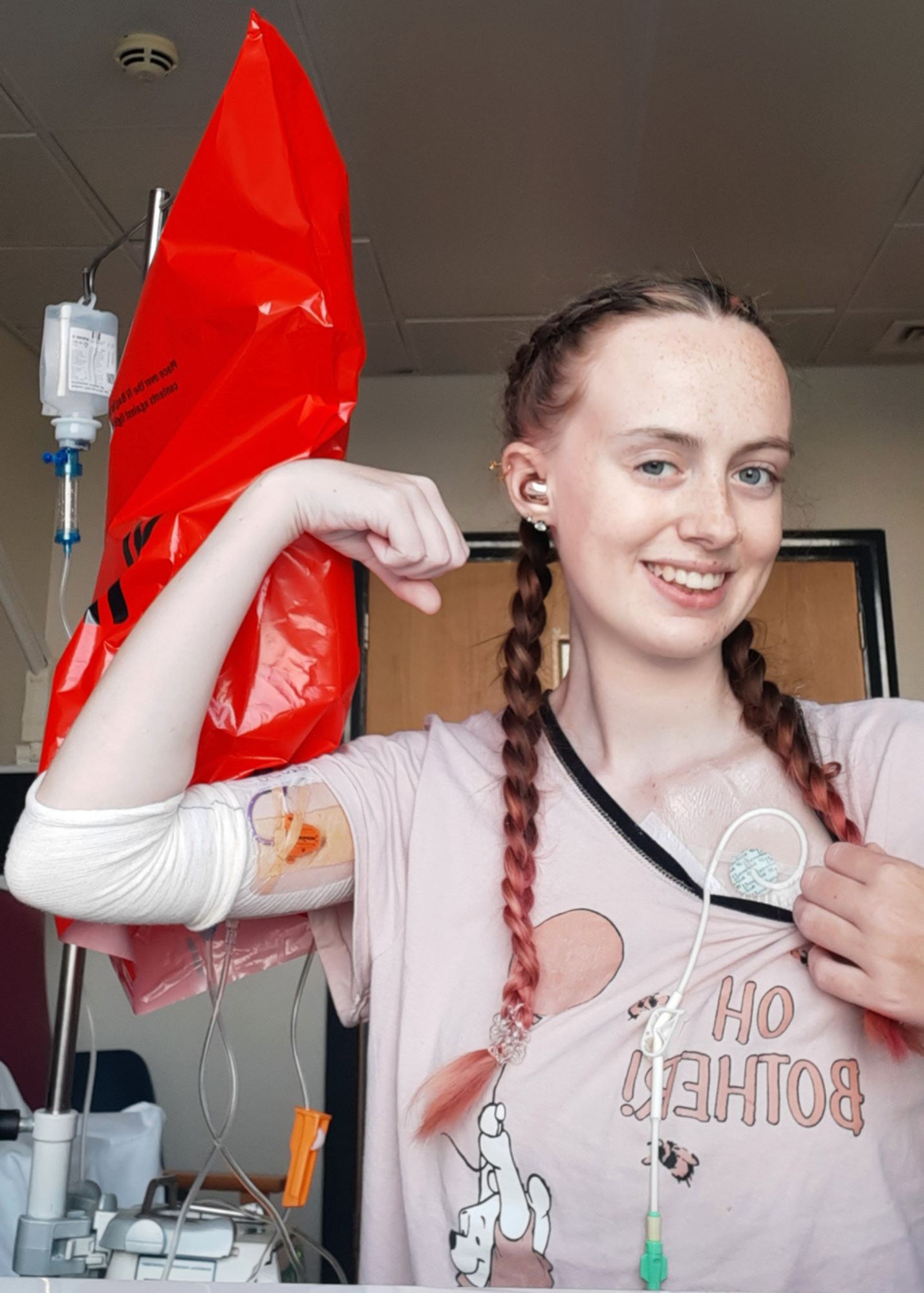
Her journey began with a nasojejunal (NJ) tube, which she relied on for around ten months before transitioning to TPN — total parenteral nutrition — a form of nutrition delivered directly into the bloodstream.
When doctors first told her she would need tube-feeding, the news felt overwhelming.
“I really struggled to process it,” Liv says. “I honestly thought my life was over. The idea of being tube-fed felt like the end of everything.”
But the reality turned out to be very different. “Tube-feeding saved me,” she says. “My life has continued because of it, even though the transition was incredibly difficult.”
Now, after nine years of tube-feeding, Liv is well-versed in the routines, challenges and emotional weight that come with it. And while she acknowledges how confronting it is at first, she wants others to know that it does get easier.
“Nobody wants to hear that it takes time,” she says. “You want it to feel better immediately. But time really does help you process it.”
What life looks like now
These days, Liv has found a rhythm that works for her. She runs her TPN overnight, setting it up around 8pm, letting it run for 12 hours, then disconnecting in the morning. Alongside this, she also runs a jejunal feed overnight, and fluids several times a week during the day.
“Everything is portable and doesn’t need gravity to feed it through, so I can go out and about and carry out my day,” she says.
Liv’s feeds are medically prescribed and carefully tailored. Her TPN is bespoke and pharmaceutical-grade, while her jejunal feed is soy-based.

Learning to be seen and challenging misconceptions
One of the hardest parts of Liv’s journey wasn’t physical, it was emotional.
“In the beginning, I was really insecure about my tubes,” she says. “I even stopped going to college because I didn’t want to be seen with them.”
At the time, she felt like her tubes had to be hidden. “I don’t know what made me feel that way. I don’t know if it was internalised ableism from society, but I felt I needed to hide it. Over time, I came to terms with it a bit more, became more confident, and realised it’s just something that helps me survive and allows me to live.”
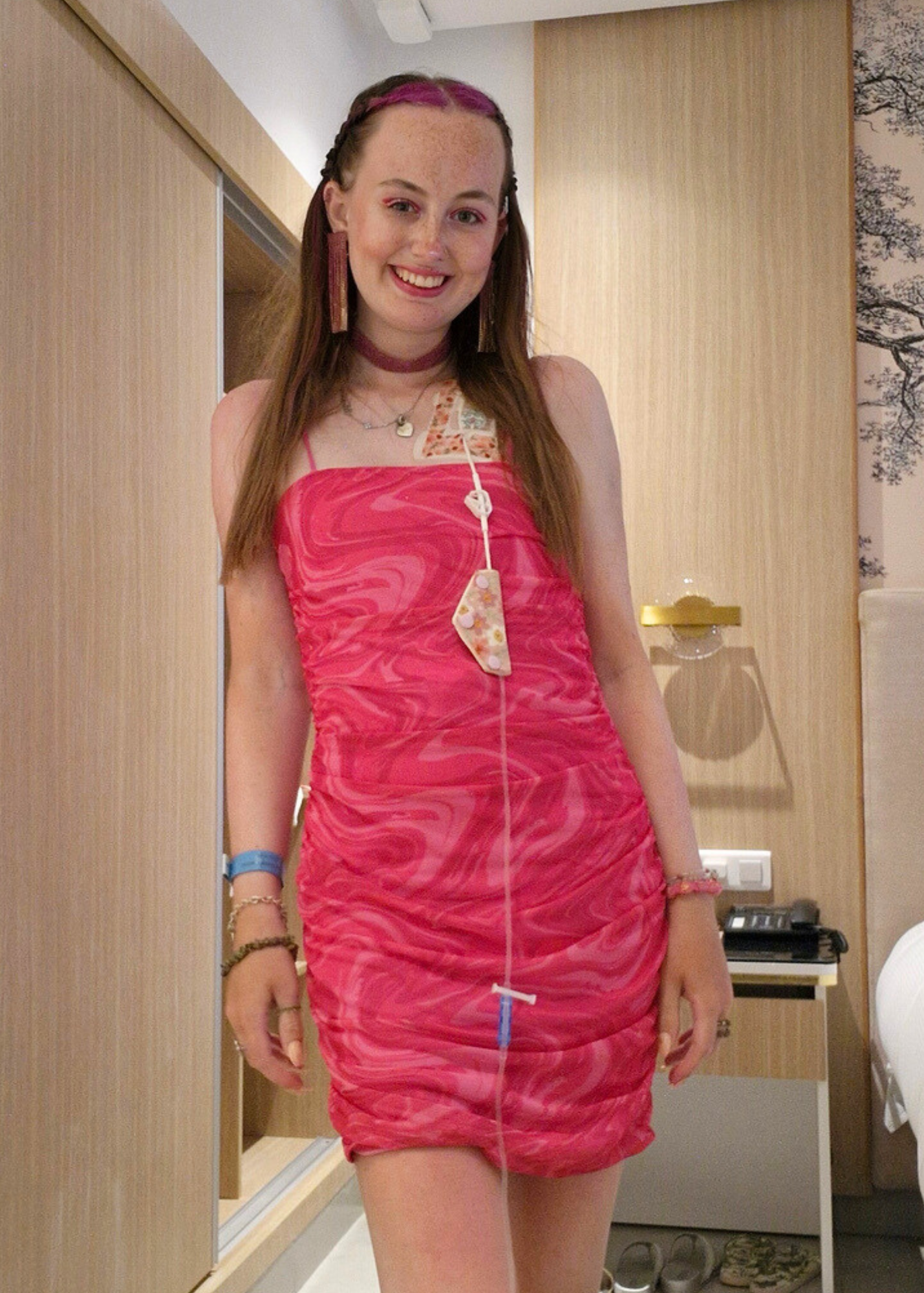
Now, showing her tubes is a deliberate part of her platform. Liv wears the clothes she wants, goes out without disguising her devices, and shares her reality openly online.
“I think it’s important to normalise it,” she explains. “Not just for chronically ill or tube-fed people, but for everyone. When people understand what they’re seeing, there’s less fear, less staring.”
One of the most common misconceptions Liv encounters is the idea that tube-feeding somehow diminishes the value of her life. “People say things like, ‘her life isn’t worth living because she’s tube-fed,’” she says.
“But tube-feeding is such a small part of my life. Tube-feeding allows me to do the things I love. My life is valid and worthy, just like any other disabled person’s life.”
When asked what it is that she loves, Liv doesn’t hesitate. “I love getting out to walk my dog,” she says.
She also speaks fondly of ballet, something she had to pause during periods of ill health, but was able to return to once tube-feeding stabilised her condition.
“That’s something people don’t always realise,” she says. “Tube-feeding didn’t take things away from me. It gave me parts of my life back.”
The power of support
Behind Liv’s strength is a strong support network. She speaks openly about how vital her mum has been in constantly advocating with her.
“There are really hard days,” Liv says. “Days where you need someone to pick you up when you can’t do it yourself.”
Online, she’s found another layer of support, and sometimes that connection comes full circle.
Strangers approach her and tell her they follow her on TikTok. Others message her to say her content helped them feel less alone. For Liv, that’s everything.
“That’s why I decided I wanted to raise awareness and share my story,” she says. “I didn’t want people going through what I did all on my own.”