
The Art of Rebuilding Yourself
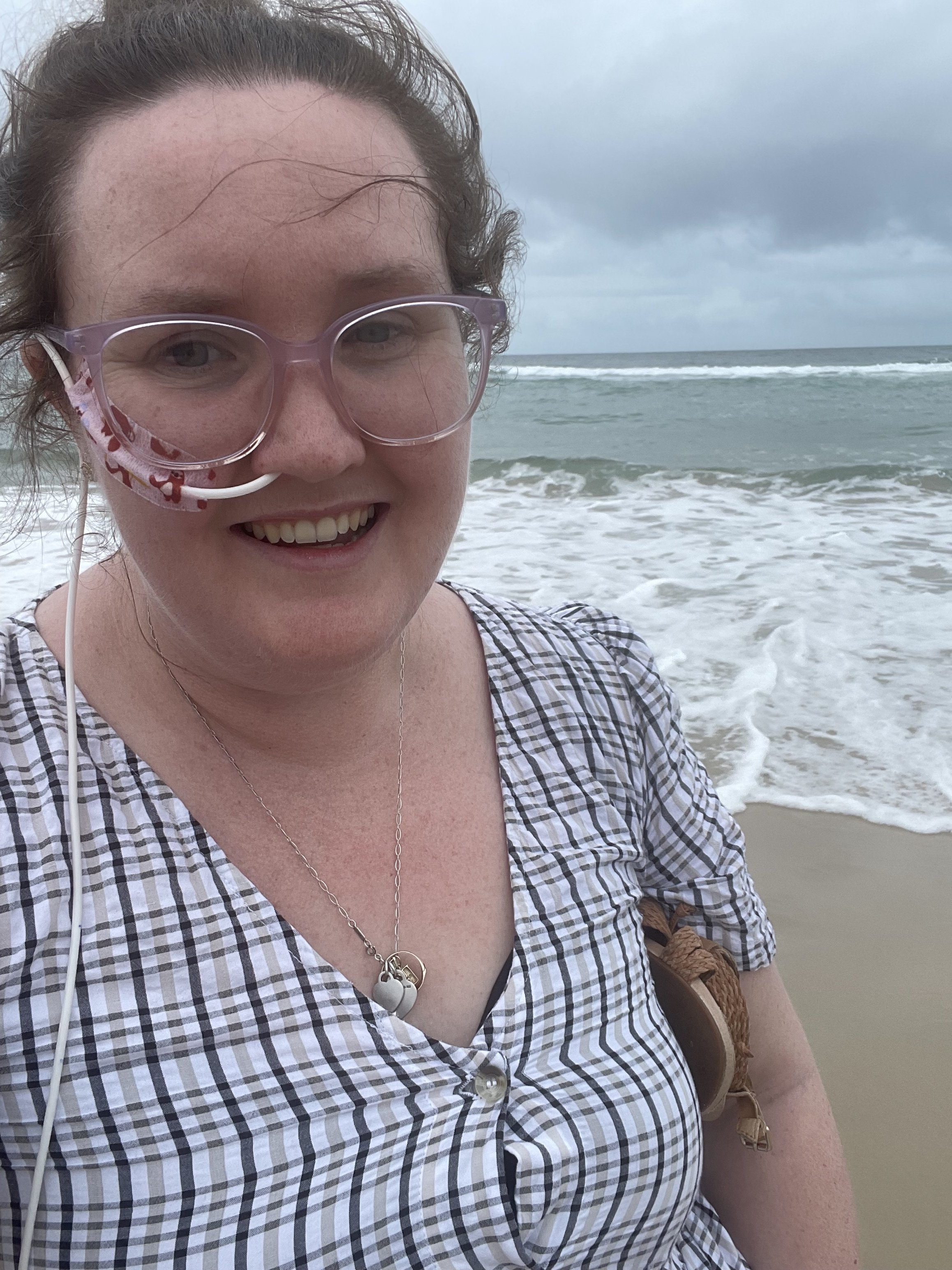
The medical side of getting a feeding tube didn’t scare KAITLIN BENDER. But looking in the mirror did. Here, she shares how she reclaimed her identity with journalist KATE THOMAS.
Kaitlin has always loved shoes. Heels, especially. Expensive ones. Carefully chosen ones. The kind that makes a statement. She laughs now when she talks about the sky-high, stiletto-heeled Christian Louboutins she bought aged 18 while in New York – “young, dumb, and stupid,” as she puts it – because life had other plans.
Being diagnosed with Ehlers-Danlos syndrome (EDS) meant that heels were no longer her friend, due to the connective tissue in her ankles being affected. But her love of fashion never disappeared. It just had to change.
Kaitlin was 29 when she received her first feeding tube, a nasojejunal (NJ) tube, after spending most of her twenties navigating debilitating gastrointestinal symptoms that were repeatedly dismissed as anxiety.
Tube-feeding was initially framed as temporary. Three months of “gut rest”. But three months became nine. Kaitlin was still vomiting anytime she put food in her mouth, so surgery became unavoidable. Eventually, she underwent surgery for a jejunostomy feeding tube, along with a venting gastrostomy (G) tube – a decision made not lightly, but with quality of life in mind.
What surprised her wasn’t the medical reality. She’d prepared for that. She had stocked up on tubie pads. She’d organised nurses to come to her house. She had researched everything: complications, stoma care, granulation tissue. What she hadn’t been warned about was the impact on her sense of self.
“You wake up from this surgery, you're in agony, you look in the mirror and think: Who the fuck is going to want to marry me? Am I ever going to be able to have kids? They're all things that I never really thought about pre-surgery.
“No one told me that the hardest thing was going to be answering the question: What the hell do I wear? You literally have to redefine yourself because you don’t look the same when you look in the mirror.”
Clothes didn’t fit the same way. Waistbands pressed on tube sites. Bras hurt. Queensland heat became harder to tolerate as her body struggled to regulate temperature due to Postural Orthostatic Tachycardia Syndrome (POTS). Slowly, she had to rebuild not just her wardrobe, but her relationship with her body.
“I think that was really the biggest one, losing my physical identity,” she says.
And then there was socialising.
“When you’re in your thirties, almost everything social seems to revolve around food,” Kaitlin says. “And that can really suck when you’re living with a feeding tube.” At first, it was hard. But she says she’s been lucky. “I’ve got friends who just get it. We’ve found new ways to connect.”
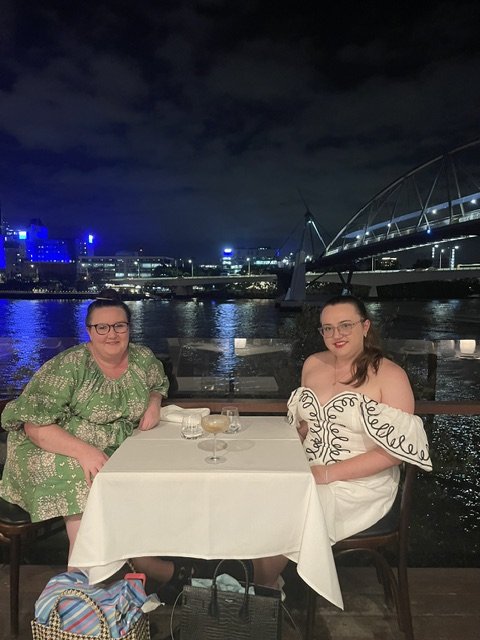
With friends who have kids, that might mean grabbing a coffee or smoothie and heading to the park for a picnic. With her lawyer friend – affectionately dubbed her “fine dining friend” – it has meant swapping fancy restaurants for wine bars, bushwalks, or even sitting on top of a mountain with a good view. “We’ve redefined what ‘social’ looks like,” she says.
Sometimes, it’s even simpler than that. Kaitlin loves a craft afternoon, or what she and her friend Stacey call “no-expectation couch chats”. “We just sit on her couch while her kids run wild, watch a movie, and talk shit,” she says. “There’s no pressure to make it an event or centre it around food.”
She credits those moments to the friendships she already had. “By the time I got my tube, I’d sifted out the people who brought drama or negativity,” she says. That mattered, because one thing living with a feeding tube has taught her is about boundaries. “I’m responsible for my actions towards others, not their feelings about what I do,” she says.
“If someone feels uncomfortable watching me tube feed, that’s their issue, not mine.”
Kaitlin’s friends have seen her through a lot.
Before her diagnosis, years of medical gaslighting delayed real answers. Her weight fluctuated dramatically, her energy disappeared, and her body steadily deteriorated. It wasn’t until she found a gastroenterologist who listened, really listened, that they were able to connect the dots between her chronic pain, joint dislocations, and gut dysfunction. She was diagnosed with EDS and related conditions, including gastroparesis gastroptosis (prolapse of the stomach) along with many other co-morbities.
Now 32, Kaitlin works as a social inclusion facilitator, supporting children and families to access early intervention. She’s also an ambassador for Children’s Rights Queensland and a child protection advocate – work that, she says, gives her a “huge sense of purpose”.
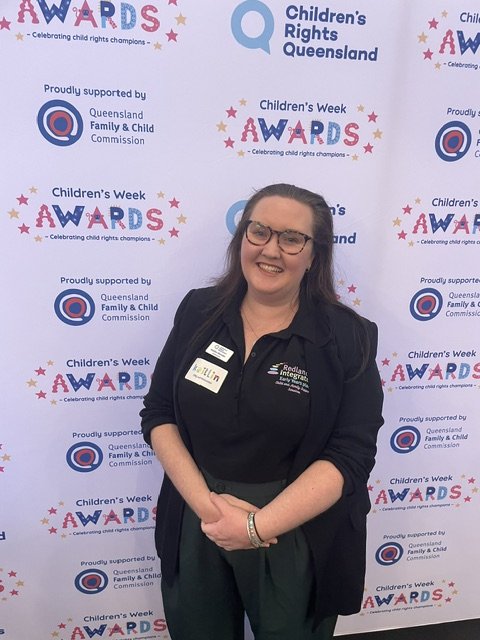
Kaitlin’s life looks different to the one she imagined in her twenties, but it’s no smaller. She works, socialises, cooks, and gently mocks her tube – all the while remaining deeply grateful for it.
“I live a fairly normal life for a thirty-something,” she says, “just with more doctors’ appointments.”
Kaitlin’s 10 essential tube-feeding tips and truths
Build a strong professional support team. A psychologist, dietitian and GP who focus on you and your quality of life. Physical health comes with an emotional toll and without the right people, the grief cycle is even more brutal.
Stoma nurses are superstars. They know more than anyone, and it’s even better when they’re low-key hilarious and can make a crisis feel calm.
True friends matter. Time away from the medical world is vital, and people who truly get it make everything easier.
A supportive workplace is gold. There’s nothing better than returning after a traumatic hospital stay to a team who missed your presence, welcomes you back and helps you ease in. It makes all the difference.
Give back if you can. Volunteering with organisations like Children’s Rights Queensland has given me purpose and a voice. Inclusion matters because “every child has rights, no matter what” – from Article 2, UN Convention on the Rights of the Child.
Support others. Knowledge is power. I speak up whenever I can to educate and inform others. Inclusive practice should be non-negotiable.
Find your tube-feeding community. Celebrate Tube Feeding Awareness Week, make connections, have conversations. No two journeys are the same, but grief is real. Find the people who know how opening a new syringe can make your day.
Remember: this is your body and your journey. If something doesn’t feel right, question it. You are your biggest advocate.
Find your style again. It may look different to yesterday but hey, 90s fashion is back. You will find yourself.
Laugh, cry, and embrace life. Whether you’re a lifer like me or a short-term tubie – you matter. You are seen. Grief will come and go, and so will moments of joy and laughter.