
Guiding Light
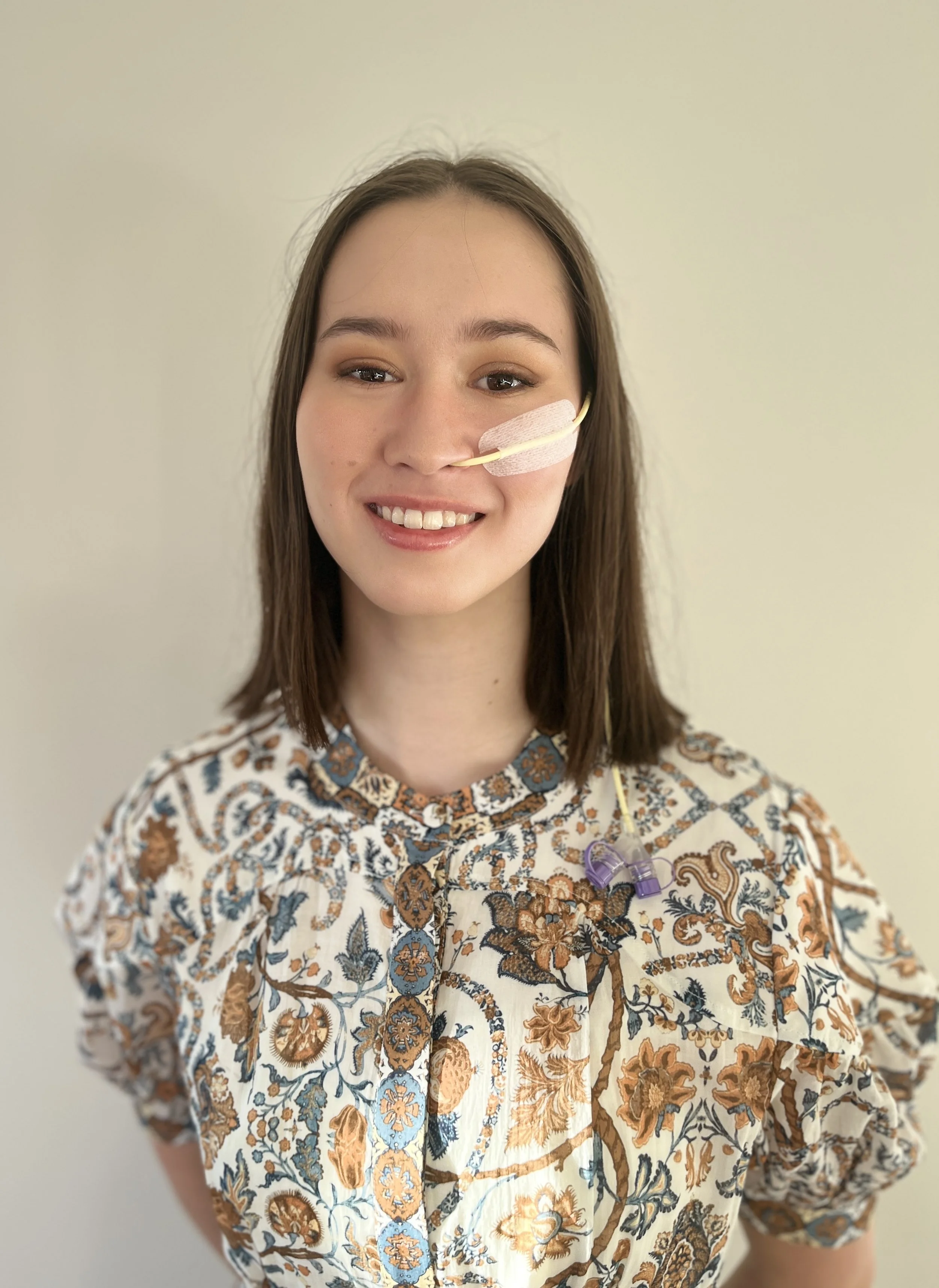
“Becoming a healthcare professional has made me an empowered patient”: OLIVIA STEAD on living, studying and advocating with a feeding tube
WORDS // KATE THOMAS
Twice a year, Olivia Stead stands in front of a cohort of student nurses and talks about what life is like with a feeding tube.
“What does it feel like?” is the type of question she welcomes.
Nothing is off limits. Bodily functions, lifestyle, tubes, complications, mental health – she’s happy to talk about all of it. As a nursing student herself, she understands their curiosity.
“They want to know how to be better, more empathetic nurses to understand the patients they’ll one day care for,” says Olivia.
Basically, the nitty-gritty stuff you don’t learn from a textbook.
The 20-year-old South Australian university student says, “I’d rather they learn from me than feel too nervous with a real patient later.”
Coming into her own
Learning from people with lived experience is what brought Olivia to advocacy – and one of the reasons she fell in love with nursing. She was also no stranger to medical settings.
Olivia was born with congenital malformations that meant her oesophagus connected to her trachea in three places, but didn’t grow far enough to reach her stomach. As a newborn, surgeons operated to close the connections, join her oesophagus to her stomach, and place a feeding tube – which she had until she was three.
She was “tubeless” for several years – until complications from her original condition re-emerged. At this point, she received a nasogastric tube, then a gastrostomy, and ended up with a gastro-jejunal tube.
At a picnic a couple of years ago, with families of tube-fed children she’d met through Instagram, Olivia found herself talking with the parents of a little girl who shared her name. They asked her what procedures like tube changes and treating granulation tissue feel like.
“I was able to explain what I’d experienced myself – what it feels like, what’s uncomfortable, and when it might help to give Panadol beforehand,” she recalls “Being able to say, ‘I know what that feels like’ feels really special.”
Moments like this clarified what advocacy could look like for Olivia: not just sharing information, but translating clinical care with a personal touch.
“I love that part of it,” she says. “Having that insight and using it to help families feel a little less scared.”
Nowadays, Olivia travels the country delivering speaking engagements about life with a feeding tube, appears on international platforms focused on tube-feeding, and works for the South Australian Health Department as an advocate for people with chronic diseases and conditions.
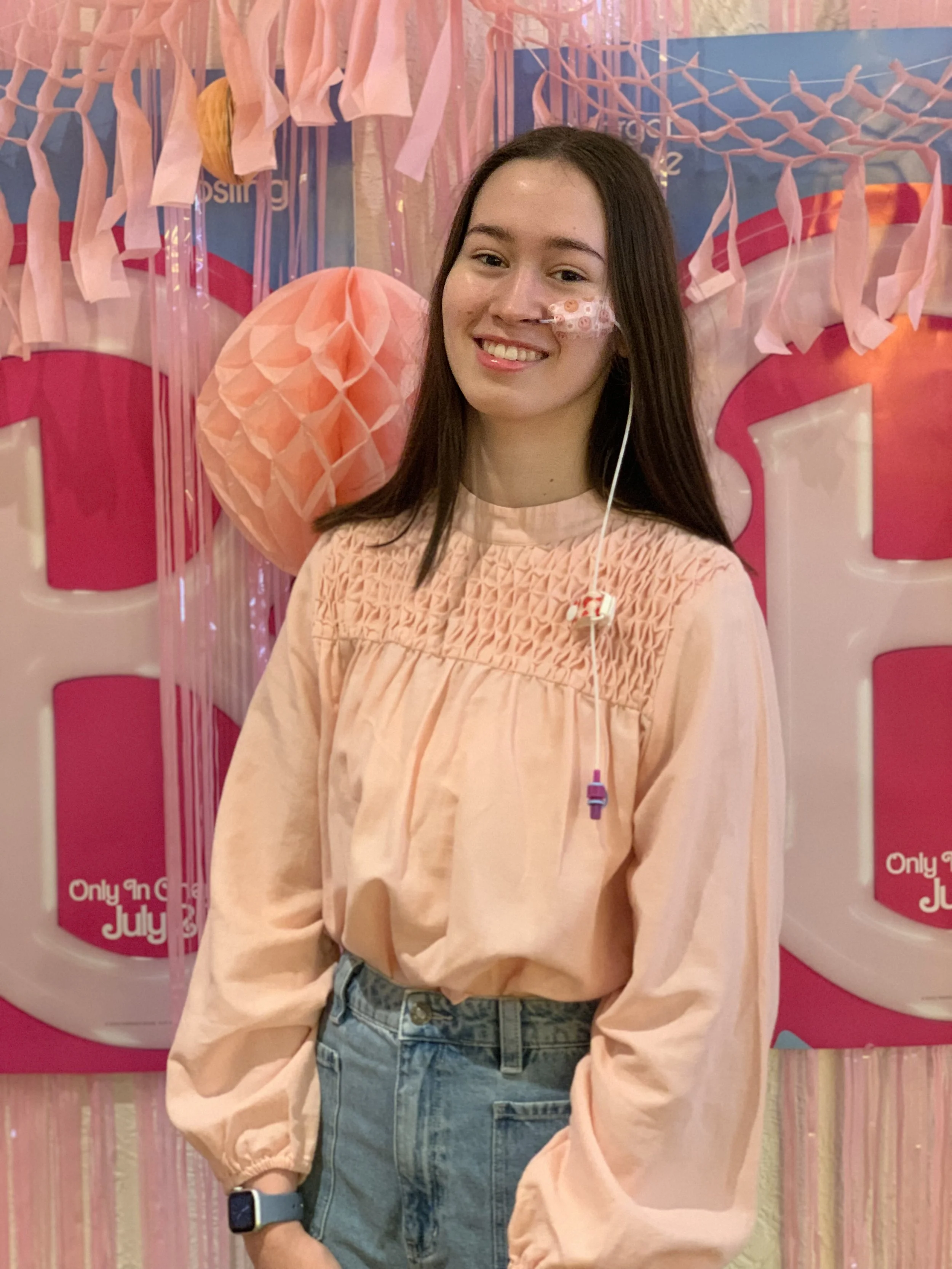
Medical empowerment
Olivia understands the incredible impact a healthcare team can have. But the challenge, she’s found, is that many patients don’t know what’s possible.
Through her nursing studies and clinical placements, she’s had a peek behind the curtain and sees the opportunity to better share information to help patients advocate for themselves and partner with their healthcare clinicians.
“I’m trying to bridge that gap between healthcare staff and patients, because we deserve to be informed and empowered,” she says.
Studying and working in healthcare has also changed the way Olivia advocates for herself as a patient. She’s learned ways to navigate the healthcare system more smoothly – also how and when concerns can be escalated.
“Becoming a healthcare professional has actually made me an empowered patient.”
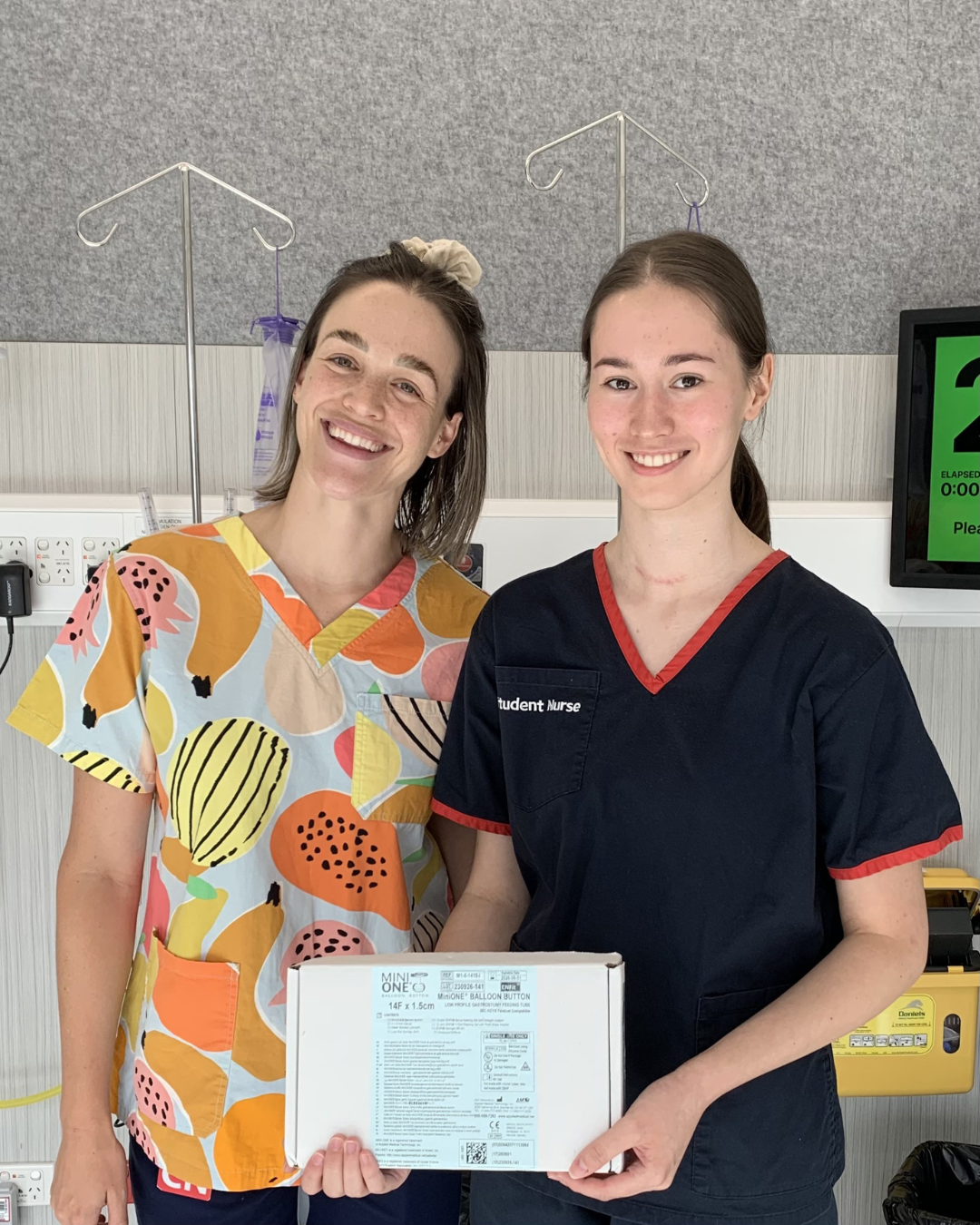
Unfiltered life
For Olivia, the desire to share information and lived experience eventually found a home online.
She started a social media account as a place to put her thoughts, not with an audience in mind but as a way to make sense of her own experiences. Scrolling back through old posts now, she can see how much she’s changed.
“There are posts from two years ago where I talk about being scared,” she says. “And then I got through it. Those sorts of reflections are really, really nice.”
What began as a private journal gradually became something else. The account has grown into a small community, connecting Olivia with other people living with disability or chronic illness. It’s bio – “Unfiltered life with birth defects and chronic conditions” – hints at the honesty she shares on the account.
“I probably put a lot of my inner thoughts onto this page,” Olivia says. “I feel very understood by the community.”
To protect that sense of understanding, Olivia eventually separated the account from her ‘everyday’ account – keeping it as a space for people who, as she puts it, “get it”.
It’s not all happy rainbows and amazing,” Olivia says.
“Sometimes it’s a bit shit. Sometimes I do need a friend to go: ‘Oh, that’s a lot to deal with, Olivia’. But, overall, I get on with it and I have a meaningful, joyful life.
“I just want people to see feeding-tubes as tools, something that give people freedom and independence. While they are not perfect, for me, my tube means I can do the things I want to do.”